


Ever dreamed of making money from an eBook, template, or online course while you sleep? Learning how to sell digital products can turn that dream into reality. In today’s digital age, anyone can package their knowledge or creativity into a product and sell it online to a global audience. Digital products offer low overhead, no shipping hassles, and unlimited scaling potential.
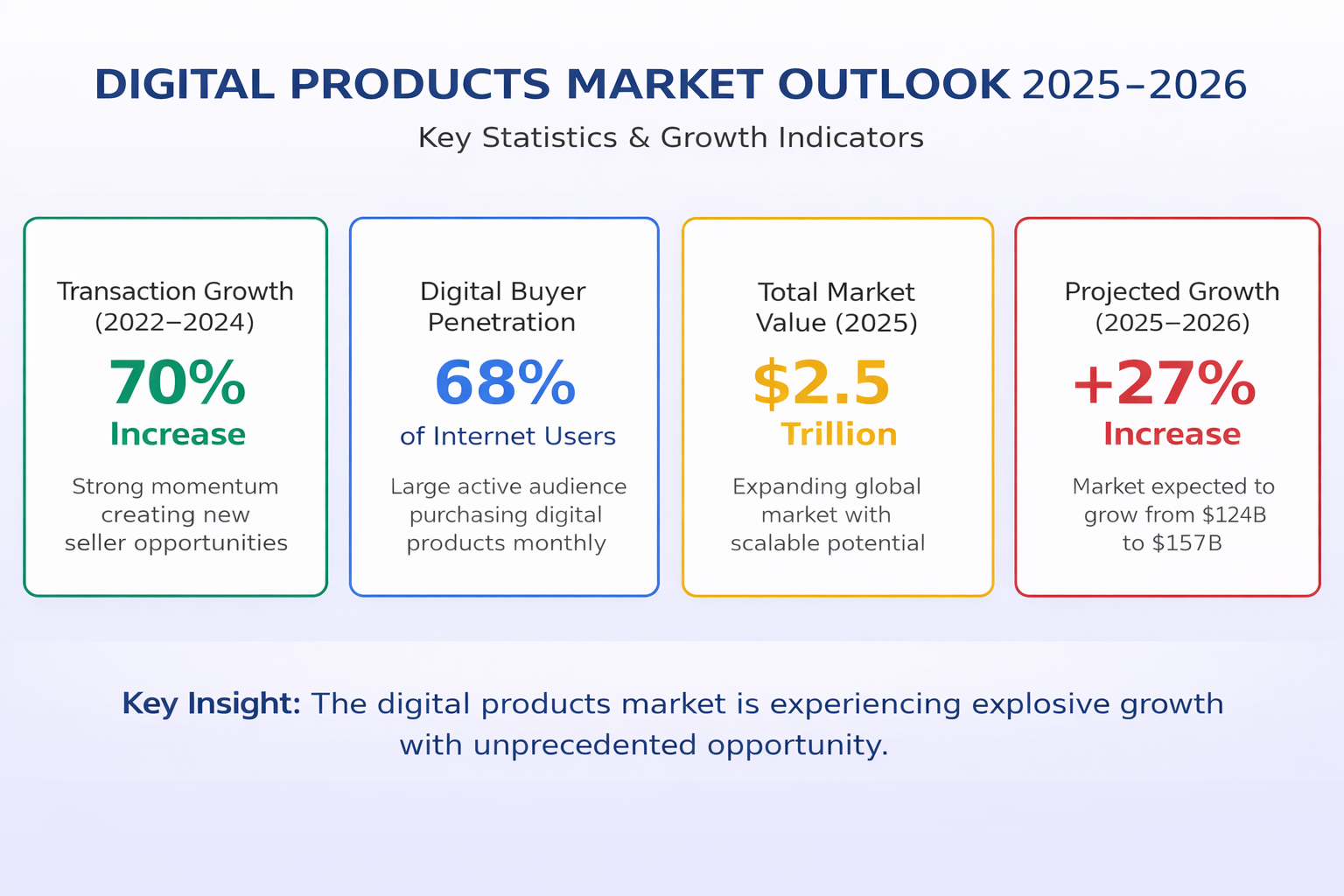
The market has exploded—transaction volumes jumped nearly 70% between 2022 and 2024. Today, 68% of internet users pay for digital content monthly, generating over $2.5 trillion annually. This guide walks you through how to sell digital products step by step, helping you launch confidently in 2026 and beyond.
What Are Digital Products and Why Sell Them?
Digital products are intangible goods sold and distributed online—downloadable or instantly accessible after purchase. Unlike physical products, they require no inventory, shipping, or manufacturing. Common examples include:
- Ebooks & PDFs: Guides, manuals, and educational content
- Online courses: Video lessons teaching specific skills
- Templates & presets: Pre-designed resources for various uses
- Software & apps: Digital tools solving specific problems
- Digital art & printables: Design assets and downloadable artwork
Why sell digital products? They offer unique advantages: low startup costs (no inventory needed), infinite scalability (sell to 10 or 10,000 people without restocking), global 24/7 reach, and high profit margins.
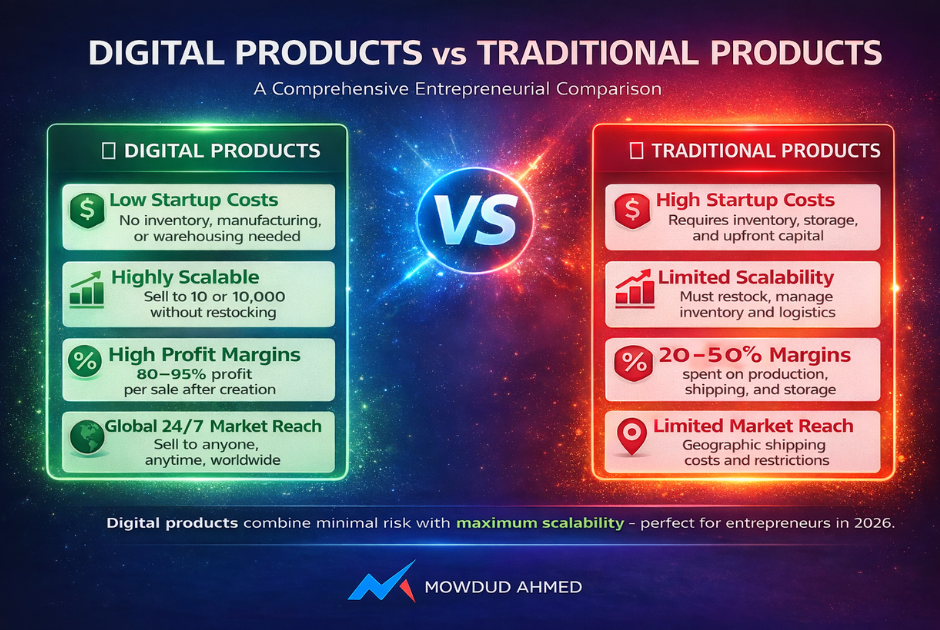
The digital goods economy was valued at $124 billion in 2025 and is projected to reach $157 billion in 2026. Each sale costs almost nothing to deliver, meaning higher profits per transaction.
Step 1: Identify Your Niche and Understand Your Audience
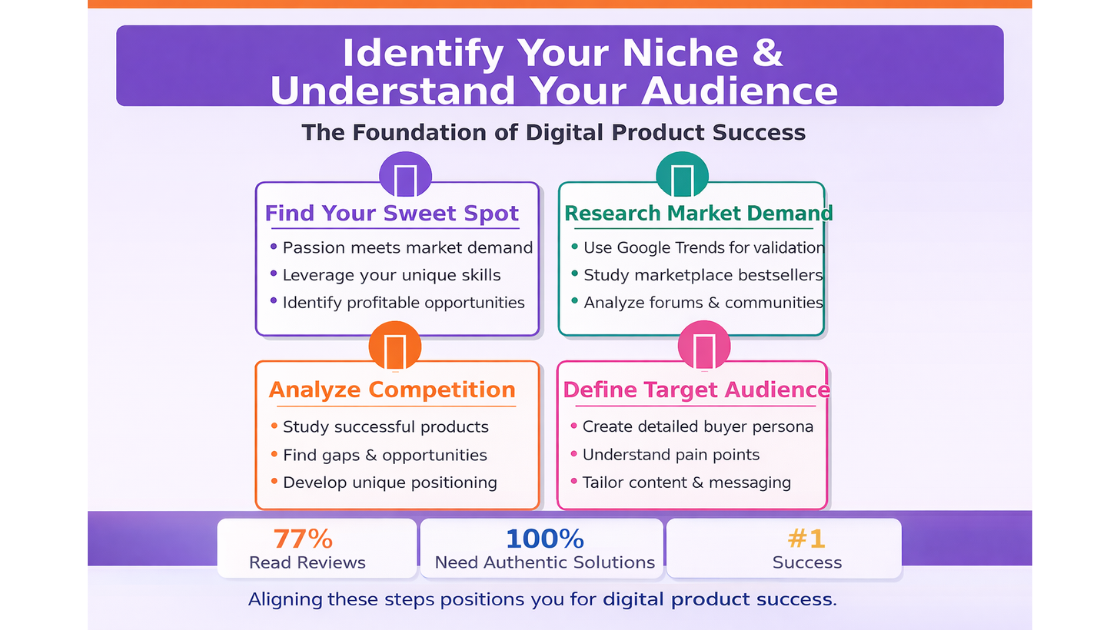
Success in how to sell digital products starts with finding the right idea for the right audience. Choose a niche where your passion meets market demand. If you’re skilled in design, there’s demand for social media templates or logo kits. The sweet spot is where your knowledge intersects with what people are actively searching for and willing to pay for.
Research market demand thoroughly: Don’t skip this crucial validation step! Validate your idea using Google Trends to see if your topic is trending upward. Browse marketplaces like Amazon Kindle for eBooks, Etsy for printables and templates, or Udemy for courses to gauge what’s selling well. Check forums, Facebook groups, and Reddit communities in your niche to identify pain points people are struggling with and questions they’re asking repeatedly.
Analyze competition strategically: Competition isn’t bad—it signals a viable market with paying customers. Study top-selling products similar to your idea. What do they do well that you can learn from? More importantly, what’s missing or could be improved? Find your unique angle, whether it’s better quality, more current information, superior design, or serving a specific sub-niche like fitness programs for new mothers or meal plans for busy professionals.
Define your target audience precisely: Who exactly are you creating this for? Create a detailed buyer persona including age range, interests, goals, and challenges. For example: “25-35 year old freelance designers seeking workflow improvements” or “stay-at-home parents wanting side income through Etsy.” The clearer your audience, the better you can tailor your content, tone, and marketing. Authenticity matters enormously—77% of consumers read reviews before purchasing, so create something genuinely valuable that earns positive feedback from the start.
Step 2: Create a High-Quality Digital Product
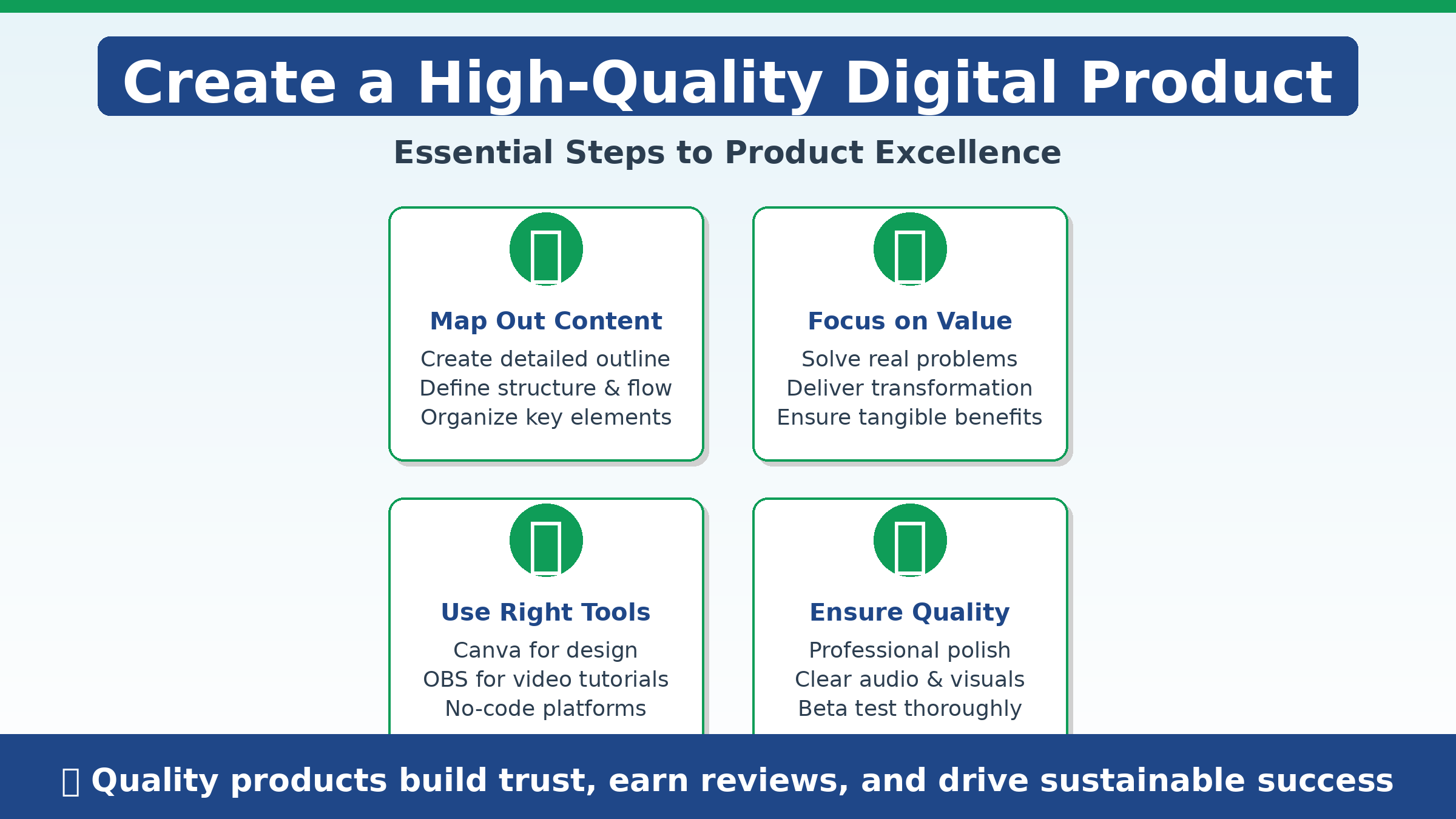
Map out content comprehensively: Before production, create a detailed outline of what your product will include. For eBooks, sketch chapters, main points, and logical flow. For courses, list modules, lessons, and what each covers. For software, define features and user flow. A clear roadmap prevents missing important elements, keeps you organized, and ensures your final product delivers on its promises.
Focus relentlessly on solving problems: Success hinges on genuine value. Throughout creation, ask: “How does this help my customer? What outcome will they achieve?” Your product should deliver transformation—teaching valuable skills, saving time and frustration, or helping achieve important goals. A meal-planning printable isn’t just pages—it’s simplifying weekly cooking, reducing stress, saving money on groceries, and reducing food waste. Keep the tangible benefit front and center.
Use accessible tools: Creating professional products is easier than ever. Tools like Canva offer drag-and-drop interfaces for beautiful eBook layouts, workbooks, or templates without design experience. For video courses, use smartphones or basic webcams with slide presentations. Screen recorders like OBS Studio capture screens and voice for tutorials. For software without coding knowledge, consider no-code platforms or hire freelancers affordably on Upwork or Fiverr. Don’t let technology intimidate you—start with tools matching your skill level.
Ensure professionalism and polish: In competitive markets, presentation matters. For videos, prioritize clear audio—viewers forgive lower video quality but poor audio is a deal-breaker. For PDFs, maintain clean design with proper formatting and readable fonts. For software, ensure bug-free performance. Proofread thoroughly, test functionality, and verify everything works. If design or editing isn’t your strength, investing modestly in professional polish can elevate your product from okay to truly professional.
Beta test and gather feedback: Before launching publicly, test with a small trusted group—friends, colleagues, or early audience members. Offer free access for honest feedback. Fresh perspectives catch issues and unclear sections you missed. Maybe a course section needs re-recording or the eBook needs more examples. This is your opportunity to refine before real customers encounter problems. Satisfied customers become your most powerful marketing assets through reviews and word-of-mouth.
Step 3: Choose the Right Platform to Sell On
Now that you have a quality product, where will you sell it? Your platform choice significantly affects reach, delivery, profits, and brand building when learning how to sell digital products.
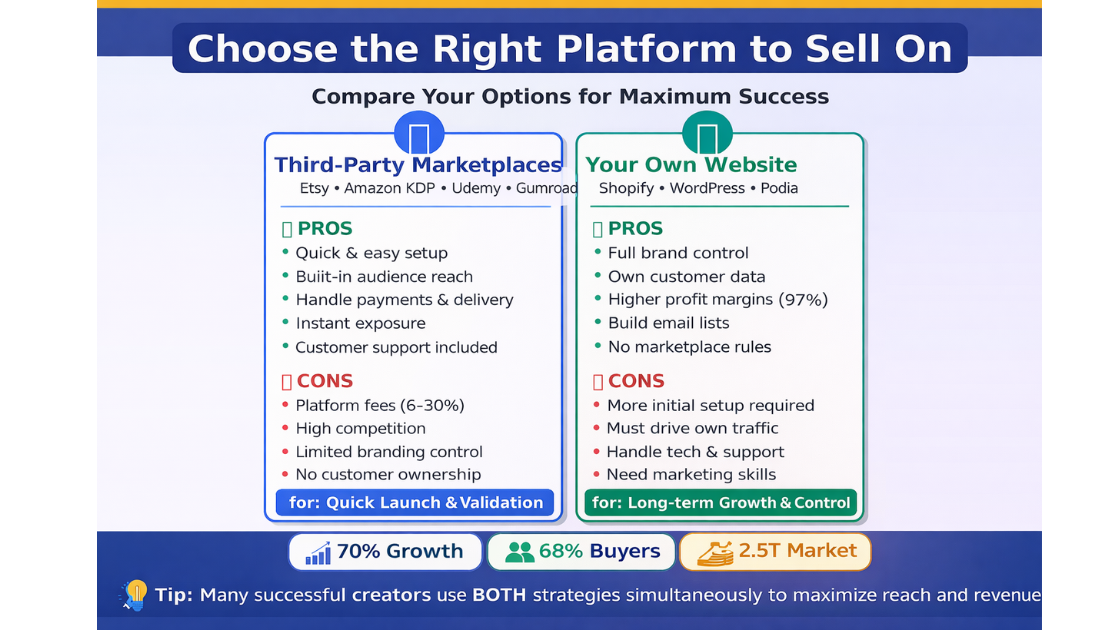
Third-Party Marketplaces: Platforms like Etsy (for printables and templates), Amazon KDP (for eBooks), Udemy (for courses), or Gumroad (for various downloads) offer built-in audiences actively searching for products.
Pros: Quick setup—they handle payment processing, file delivery, and customer support. You get instant exposure to millions of potential shoppers. For instance, Etsy and Amazon have massive user bases, so your product could appear in search results and reach customers you’d never find otherwise.
Cons: Marketplaces take percentage cuts (Etsy ~6%, Gumroad 10-30%), reducing profit margins. You compete alongside potentially hundreds of sellers, making differentiation challenging. You have less control over branding, and the marketplace often “owns” customer relationships, limiting your ability to market future products directly.
Your Own Website: Selling through a site you control using WordPress + WooCommerce, Shopify, Podia, system.io or builders like Hostinger Website Builder.
Pros: Complete control over brand identity, visual design, and customer journey. You can build and own email lists from purchases, enabling direct marketing to previous buyers—an invaluable business asset. You avoid marketplace competition and retain much larger revenue shares, paying only small payment processing fees (typically 2-3%) instead of 10-30% marketplace cuts.
Cons: Requires more initial setup and you’re responsible for hosting, design, delivery, and support. However, modern platforms have simplified this dramatically. The main challenge is driving traffic—you must attract customers through marketing and SEO since you lack built-in marketplace audiences.
If you’re looking for a comprehensive done-for-you solution to launch your digital product website quickly, consider Digital Academy Fortune. This platform provides ready-made digital products, e-coourses, e-books, and complete sales funnels so you can start selling immediately without creating products from scratch. Learn more about Digital Academy Fortune here.
Many successful creators start on marketplaces to validate ideas and gather initial reviews, then expand to their own websites for greater control and profits. You can use both strategies simultaneously to maximize reach. Whichever you choose, ensure smooth checkout, automatic delivery, and clear customer support.
Step 4: Set Up Your Store and Pricing Strategy
Create compelling listings: Use benefit-focused titles like “Ultimate Social Media Content Calendar—365 Days of Posts.” Include high-quality visuals: cover images, screenshots, or mockups showing your product in action.
Write persuasive descriptions addressing customer needs. Break text into scannable paragraphs highlighting specific features: “50+ page ebook with proven strategies” or “10 video lessons with downloadable worksheets.” Emphasize benefits over features—explain how it transforms their life or work. Use confident, authentic language.
Set strategic pricing: Research niche pricing. eBooks range $5-$50+, courses $30-$500+, design assets $5-$20. Consider introductory pricing for early sales and reviews—you can raise prices later. Ensure prices feel like exceptional value. Display pricing clearly with what’s included.
Set up secure payment processors (Stripe, PayPal) and ensure automatic file delivery immediately after purchase. Test the complete purchase process before launching.
Step 5: Promote Your Digital Product (Marketing Strategies)
Marketing means sharing solutions with people who need them. Here are effective strategies:
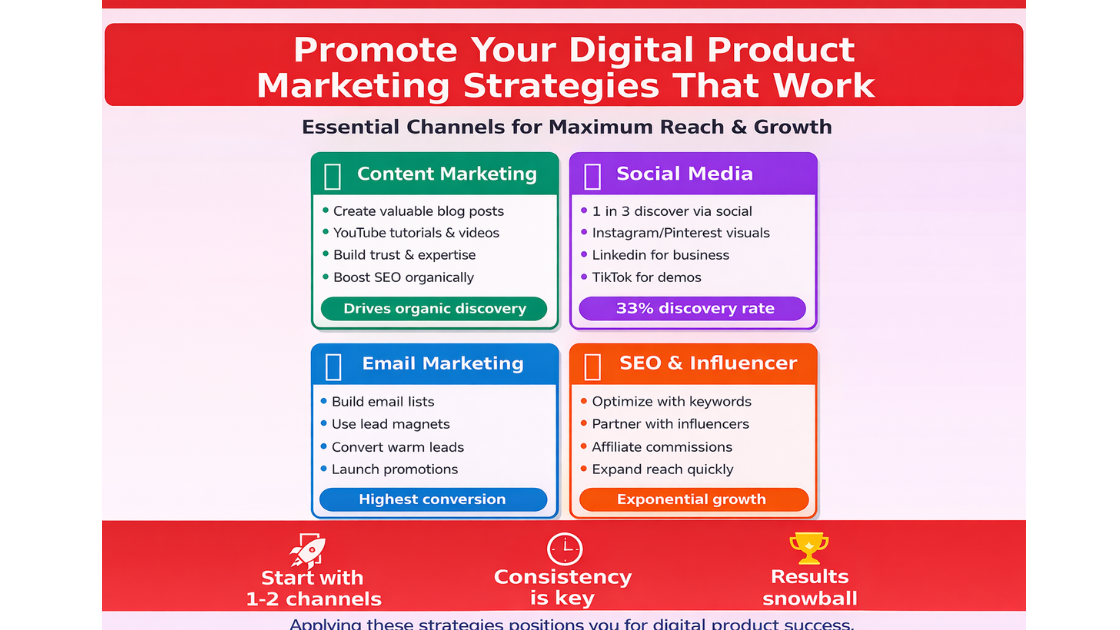
Content Marketing: Create free blog posts, YouTube videos, or podcasts related to your product. If selling a coding course, write “5 Tips to Start Python” and mention your course. This builds trust, demonstrates expertise, and boosts SEO over time, helping new people discover you organically.
Social Media Marketing: In 2026, 1 in 3 consumers discover products through social media. Use Instagram/Pinterest for visual products, LinkedIn for business content, TikTok for demos. Explore social media marketing trends 2026 to understand where your audience spends time. Master the top 6 social media marketing skills to level up your promotion. Engage authentically—share useful content, interact with comments, use relevant hashtags, and collaborate with other creators.
Email Marketing: Build an email list using lead magnets—free samples in exchange for email addresses. For instance, if you sell a meal-planning eBook, offer a free one-week sample plan. Email converts warm leads to buyers, especially during launches or promotions. Send valuable tips and occasional strategic promotions. Keep emails personal and helpful. For comprehensive guidance, check out these easy tips for email marketing.
SEO & Influencer Marketing: Optimize your site with relevant keywords using Google Keyword Planner for organic traffic. Partner with niche influencers or micro-influencers—offer free products and affiliate commissions. They earn from sales while expanding your reach. Virtual influencers are also emerging as innovative marketing channels.
Start with one or two channels you’re comfortable with, then expand. Consistency is key—marketing is continuous engagement that builds relationships and snowballs over time.
Step 6: Scale Up with Automation and Growth Strategies
Once you’ve launched and made your first sales, the exciting question becomes: how do you grow from occasional sales to consistent income? The answer lies in scaling strategically and using automation intelligently.
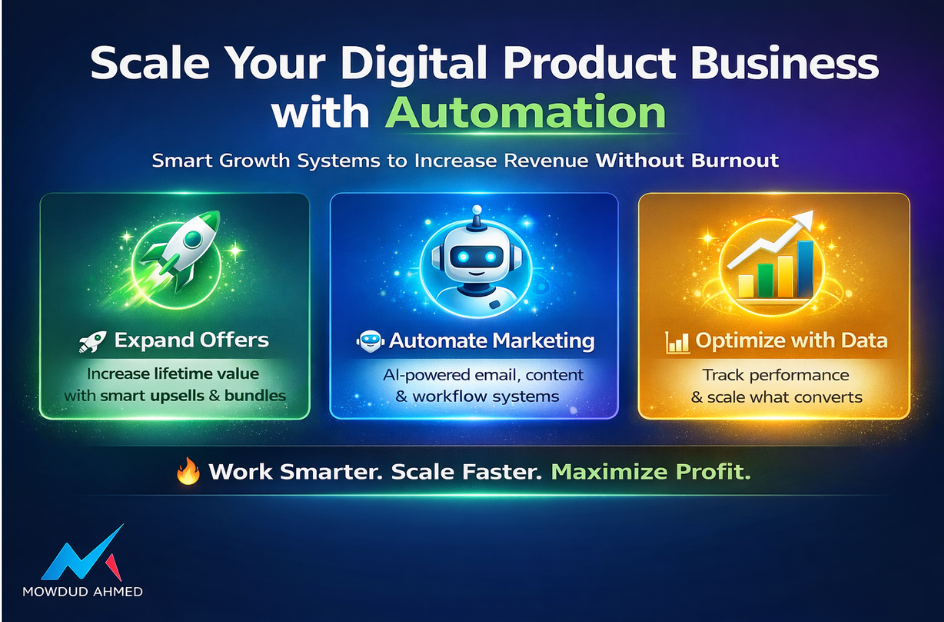
Expand your product line strategically: One proven way to grow revenue is creating complementary products that serve your existing audience. If your first product was well-received, think about natural next offerings. Turn an eBook into a comprehensive video course. Create advanced template packs or different style variations. Offer workbooks, checklists, or implementation guides as add-ons. Having multiple products increases customer lifetime value—they might purchase several items from you over time rather than just one. Consider bundling products at value prices or implementing upsells where customers see additional relevant offers after purchasing.
Leverage powerful automation and AI: Running a digital product business involves many tasks—customer emails, social media posting, content creation, analytics. To scale without burning out, identify repetitive tasks to automate. Set up automated email sequences for new subscribers, schedule social posts weeks in advance with tools like Buffer or Hootsuite, and create FAQ pages to handle common questions.
In 2026, AI-powered tools offer unprecedented efficiency gains. For instance, FranknAI automatically generates complete 365-day social media content calendars specifically for your business and posts content across all major platforms daily—essentially functioning like a tireless virtual marketing assistant working 24/7 to keep your audience engaged and attract new customers on autopilot.
Additionally, tools like AIInfluence help create compelling AI-powered influencer content and campaigns that engage your target audience authentically while you focus your valuable time on product creation and strategic business growth. By embracing these automation tools, you ensure promotion runs consistently in the background every day, continuously attracting qualified traffic and generating sales even while you sleep.
Build community and track key metrics: Foster engaged communities through Facebook groups, Discord servers, or membership sites. Community increases customer loyalty—people who feel connected are more likely to buy repeatedly and recommend you to others. They become brand advocates organically.
Simultaneously, track your business metrics religiously. Which products sell best? Where does traffic come from? What’s your conversion rate? What’s the customer acquisition cost versus lifetime value? Use analytics platforms (Google Analytics is essential for websites) to identify patterns. If a particular blog post drives disproportionate sales, create more similar content. If one product underperforms, analyze why and either improve it or discontinue it. Use data to make informed decisions rather than guessing. Scaling successfully is fundamentally an iterative process of continuous improvement based on real feedback and hard data.
Start Your Digital Product Journey Today
Every successful digital entrepreneur started exactly where you are now—with an idea and determination. This comprehensive guide on how to sell digital products provides your complete roadmap to success. Let’s recap the key steps:
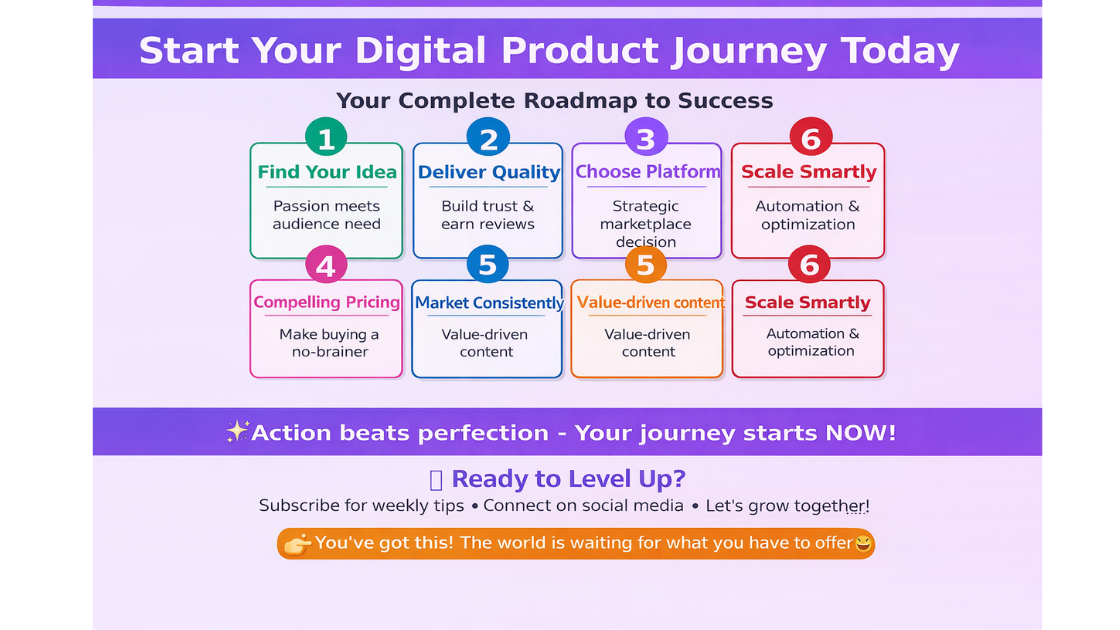
- Find your winning idea where passion meets audience need. Research thoroughly and validate demand before investing significant time.
- Deliver exceptional quality that builds trust and earns glowing reviews. Remember, your product’s quality is the foundation of everything else.
- Choose the right platform for your audience and goals. Whether marketplace, website, or both—make strategic decisions based on your situation.
- Craft compelling presentations with strategic pricing that makes buying a no-brainer for your target customers.
- Market consistently with value-driven content across channels where your audience spends time. Consistency compounds over time.
- Scale smartly with automation and data-driven optimization. Work smarter, not just harder.
Most importantly, maintain a supportive mindset toward yourself throughout this journey. There’s absolutely a learning curve to selling digital products—you’ll have slow days, make mistakes, and face challenges. That’s completely normal! Every setback is genuinely a valuable chance to learn, adapt, and refine your approach. With each step forward, you’re gaining irreplaceable experience and confidence that will serve you for years to come.
The digital product business model offers incredible flexibility and potential. You can start small with one product while working a full-time job, then gradually expand as you gain traction. Many successful digital entrepreneurs built six-figure businesses starting with a single eBook or course. The key is taking that crucial first step today.
So what’s your first step? Maybe outline your product idea in detail, sign up for that marketplace account you’ve been considering, draft your first blog post announcing what’s coming, or simply commit to dedicating focused time each week to your digital product journey. Whatever it is, take action today. Action consistently beats perfection—your “good enough” product launched and improving is infinitely better than a perfect product that never sees the light of day.
Ready to Level Up?
For more free tips, tutorials, and inspiration on digital marketing and online business, subscribe to my YouTube channel for weekly videos that will keep you motivated and informed as you build your digital product empire.
Connect with me on social media for daily insights, tips, and updates. Let’s grow together!
You’ve got this! The world is waiting for what you have to offer. Good luck!