


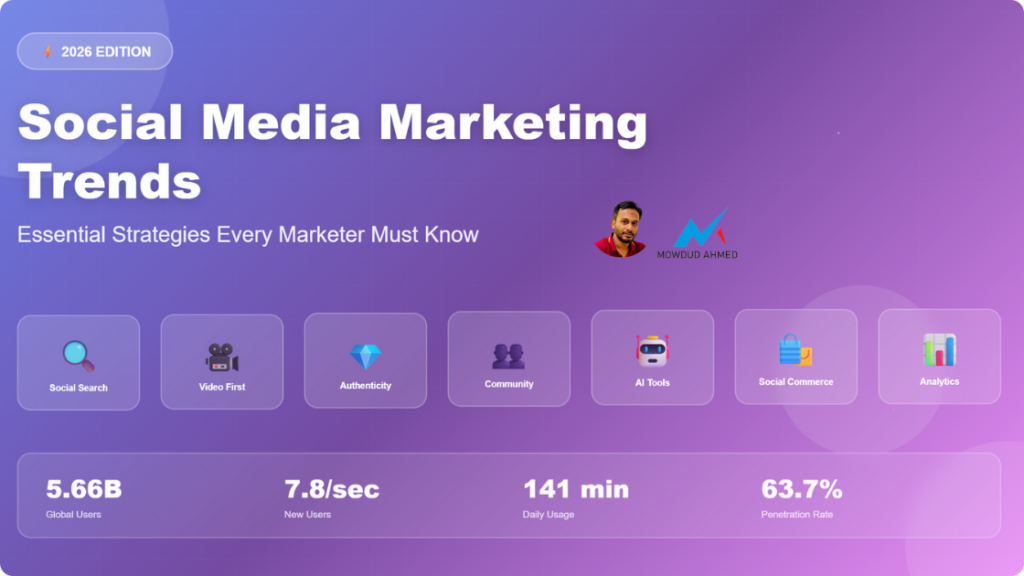
Social media marketing has undergone a seismic transformation. What started as simple networking platforms have evolved into comprehensive digital ecosystems where discovery, research, shopping, and customer engagement converge seamlessly. For businesses and marketers navigating this rapidly evolving terrain in 2026, understanding emerging social media marketing trends isn’t just beneficial—it’s absolutely critical for survival. The landscape demands a fundamentally different approach, where consistency, authenticity, and strategic automation have become the pillars of success.
The State of Social Media in 2026: A Data-Driven Overview
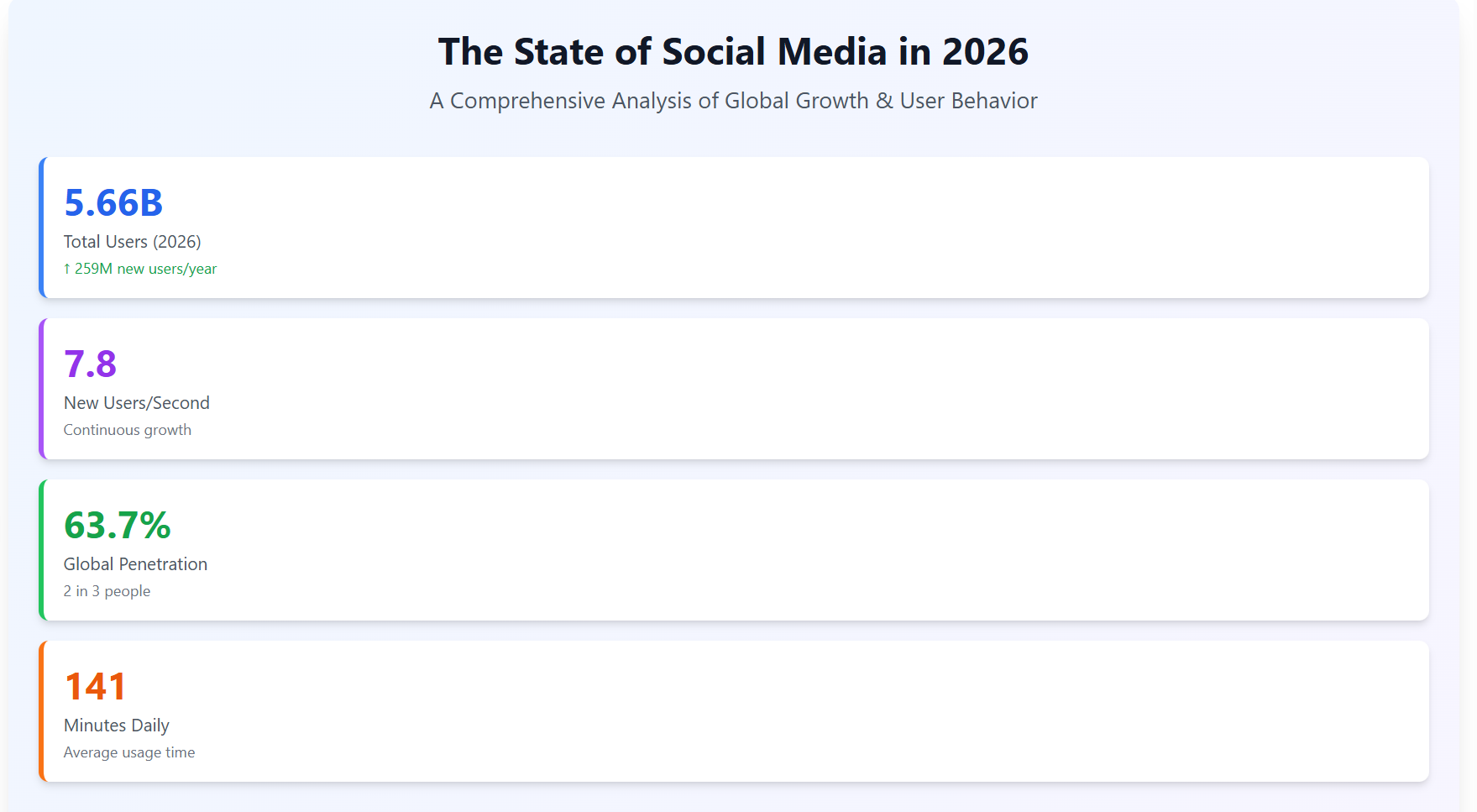
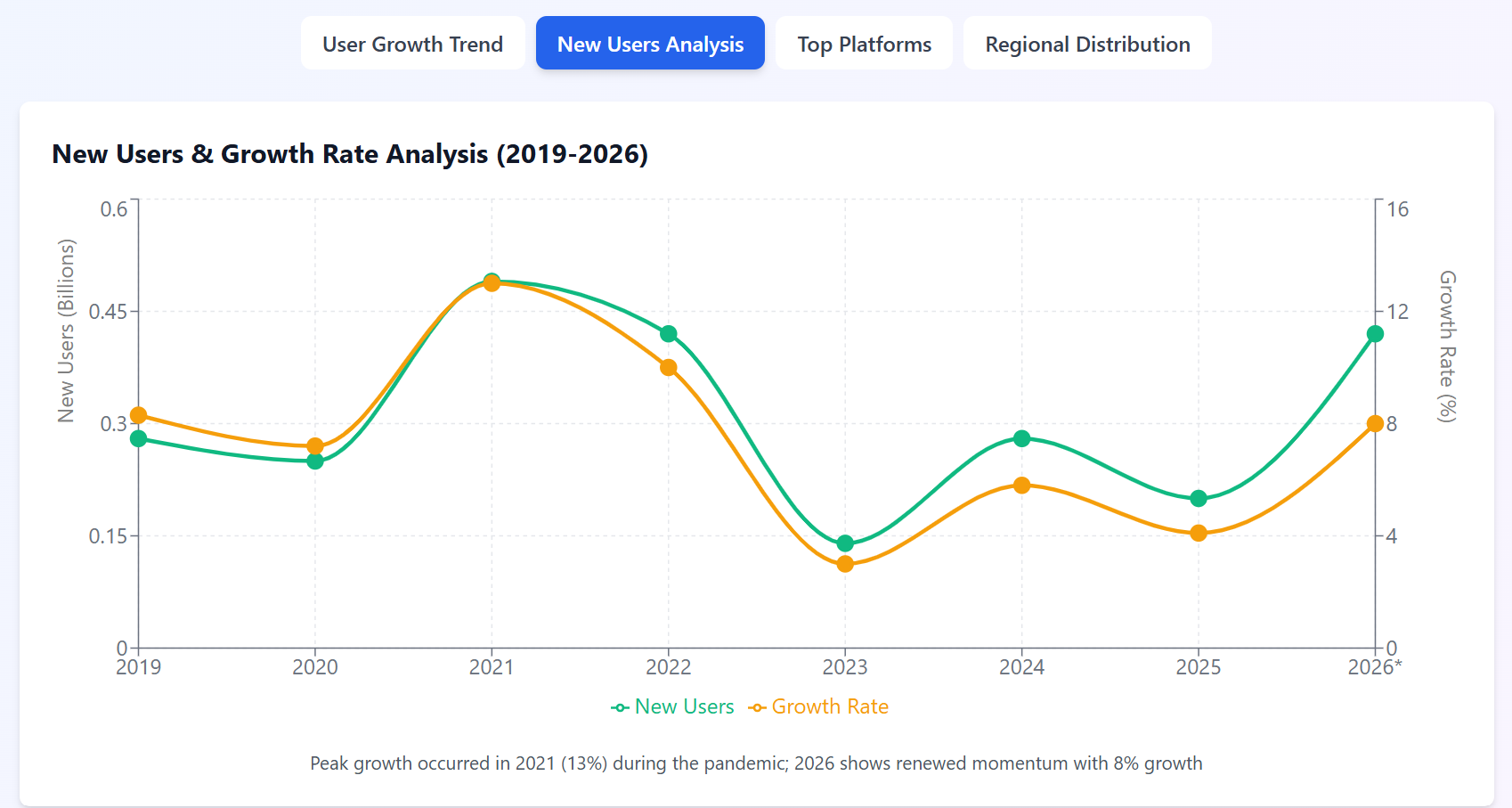
The numbers tell a compelling story. As of October 2025, there were 5.66 billion social media user identities worldwide, with 259 million new users joining since the previous year. This represents a growth rate of 4.87 percent, translating to 7.8 new users every single second.
Even more striking is the shift in user behavior. According to Sprout Social’s Q2 2025 Pulse Survey, nearly one in three consumers now skip Google entirely, starting their search journey on networks like TikTok, Instagram, or YouTube instead. For Gen Z, this number exceeds 50 percent. The consumer journey in 2026 looks dramatically different from just a few years ago.
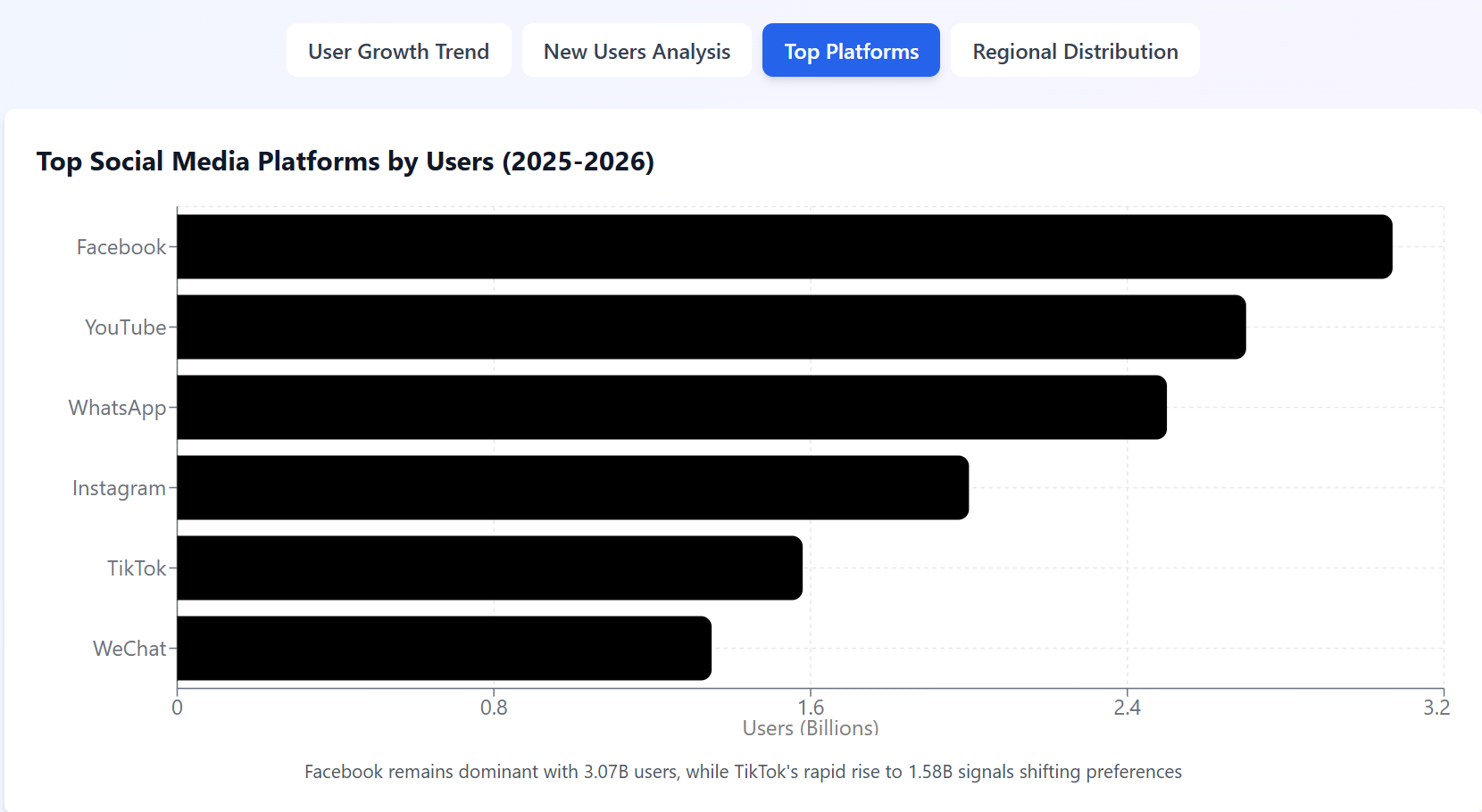
The market potential is equally impressive. The latest data shows 5.24 billion active social media users globally, with that total increasing by 4.1 percent over the past 12 months. This isn’t just growth for growth’s sake—it represents a fundamental shift in how people discover brands, research products, and make purchasing decisions.
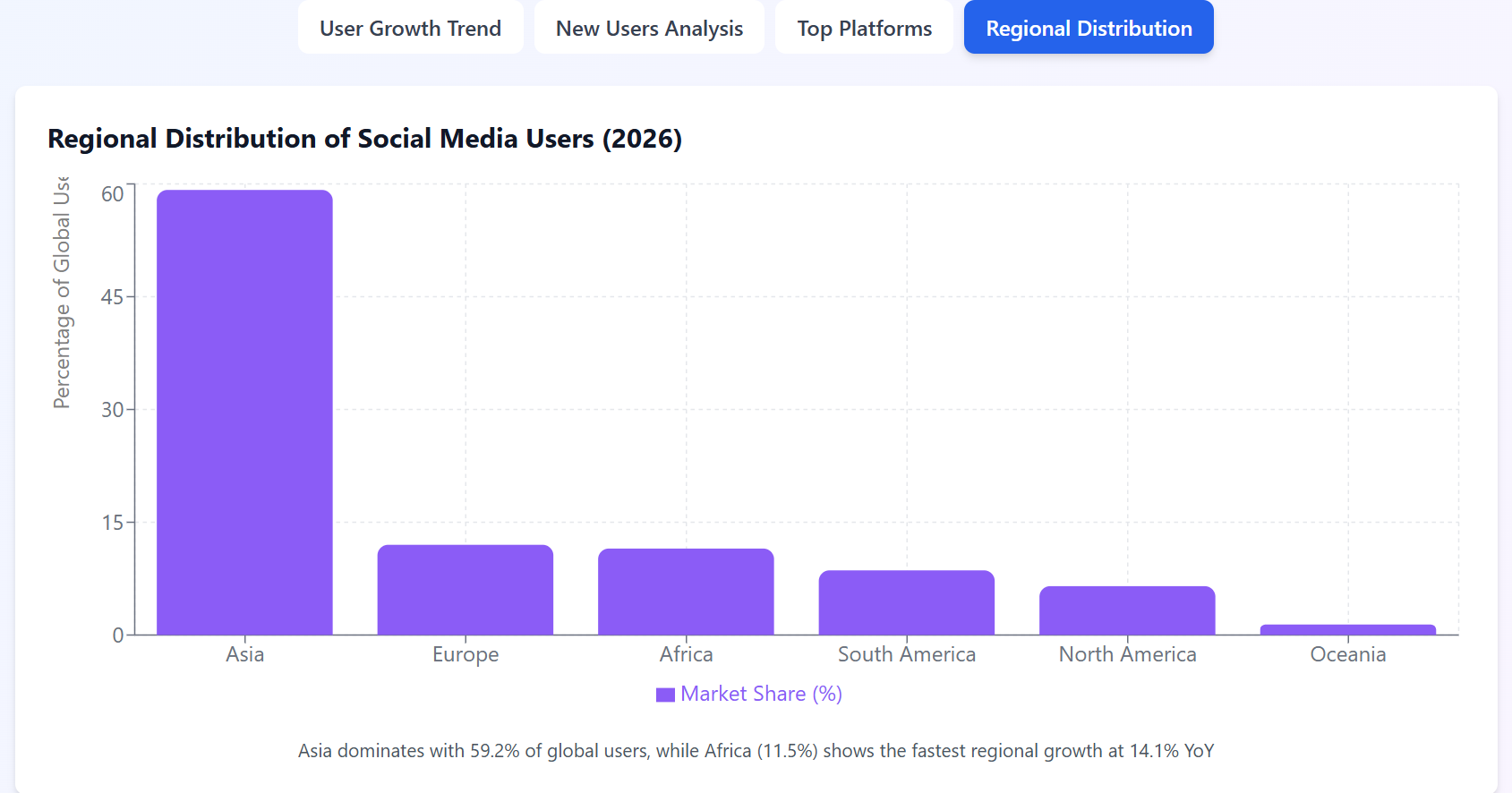
Comparing Year-Over-Year Growth
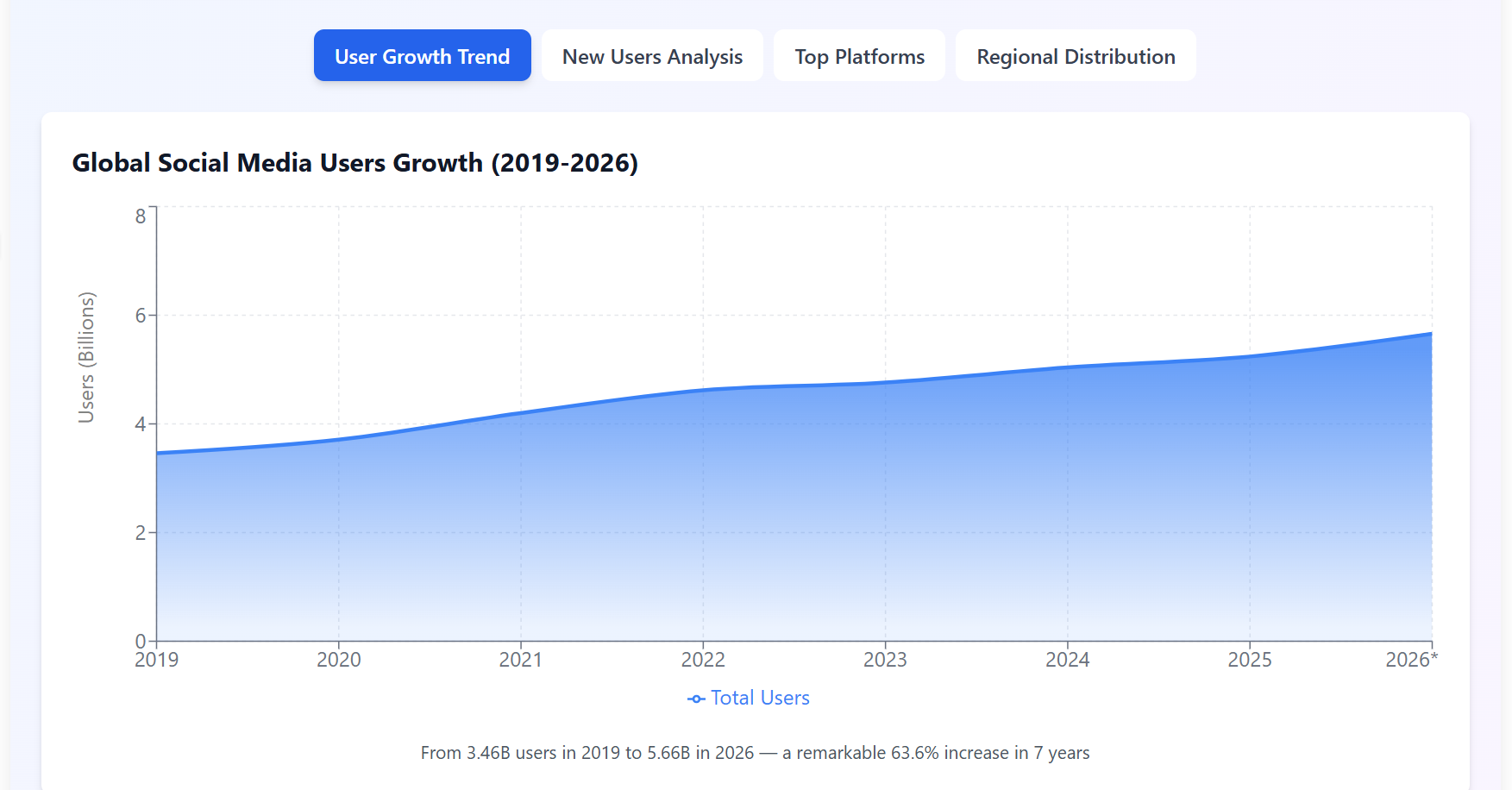
When we examine the trajectory from 2019 to 2026, the evolution is remarkable:
- 2019: Social media was primarily about connection and entertainment
- 2025-2026: Platforms have become comprehensive search engines, shopping destinations, and customer service hubs
- User Growth: From approximately 3.5 billion users in 2019 to 5.66 billion in 2025—a 61 percent increase
- Time Spent: The typical internet user now spends more than 1 full waking day each week using social media
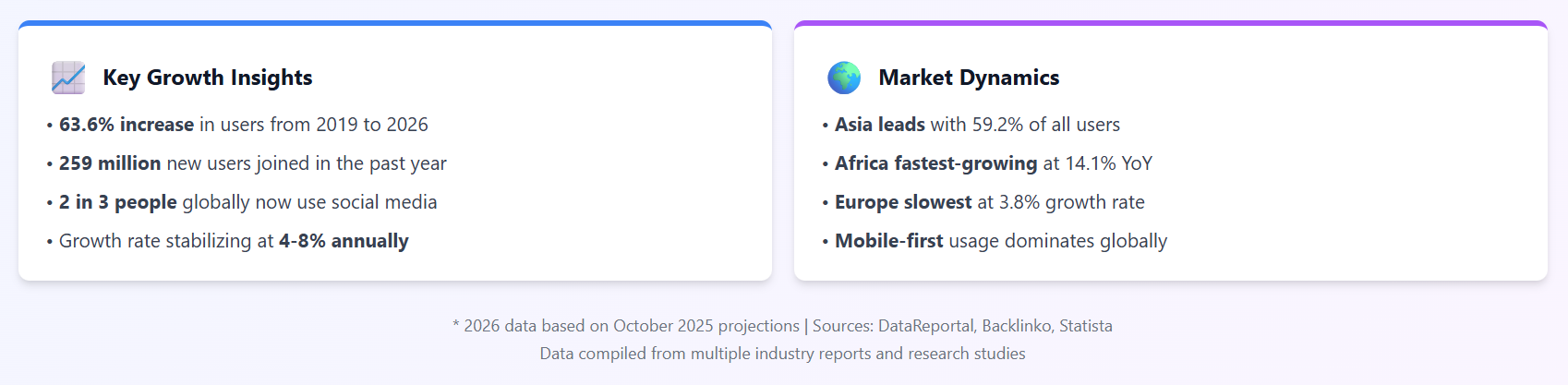
This explosive growth hasn’t come without changes. The platforms that dominated in 2019 have had to adapt or face obsolescence, while entirely new platforms have emerged to capture audience attention.
1. Social Platforms Are the New Search Engines for Social Media Marketing
Perhaps no trend is more transformative for social media marketing than the shift from traditional search engines to social platforms for product discovery and information gathering.
The Search Revolution
Research from Forbes shows that 24 percent of people are directly searching on social channels like TikTok, Instagram, and YouTube instead of Google, and this adoption is growing quickly, especially among younger generations.
This isn’t just about finding entertainment—consumers are actively searching for product information, how-to guides, reviews, and purchase recommendations. Power Digital’s 2026 State of Social Media Trends Report reveals that 60 percent of users rely on Instagram for product research, up 16 percent from last year, while 54 percent use TikTok specifically to research products or services.
The New Consumer Journey
The purchase path has fundamentally changed:
- Discovery: Users discover products through authentic, entertaining content on TikTok
- Validation: They move to Instagram to research more deeply, reading comments and checking tagged content
- Conversion: Purchase decisions often happen directly through the platform
Strategic Implementation for Social Media Marketing
To capitalize on this trend, marketers must:
- Optimize Every Post for Search: Include natural keywords in captions, titles, and video scripts. Every piece of social media marketing content is now a searchable asset that could attract high-intent users.
- Create Educational Content: Answer common questions your audience is searching for. Think of your social content as SEO-optimized articles, but in video or carousel format.
- Use Authentic Voice: Keywords matter, but forced optimization destroys engagement. Maintain your brand’s natural tone while incorporating relevant search terms.
Tools like SEMrush and native platform analytics can help identify what your audience is actively searching for on each platform.
2. Video Content Dominance Across All Formats
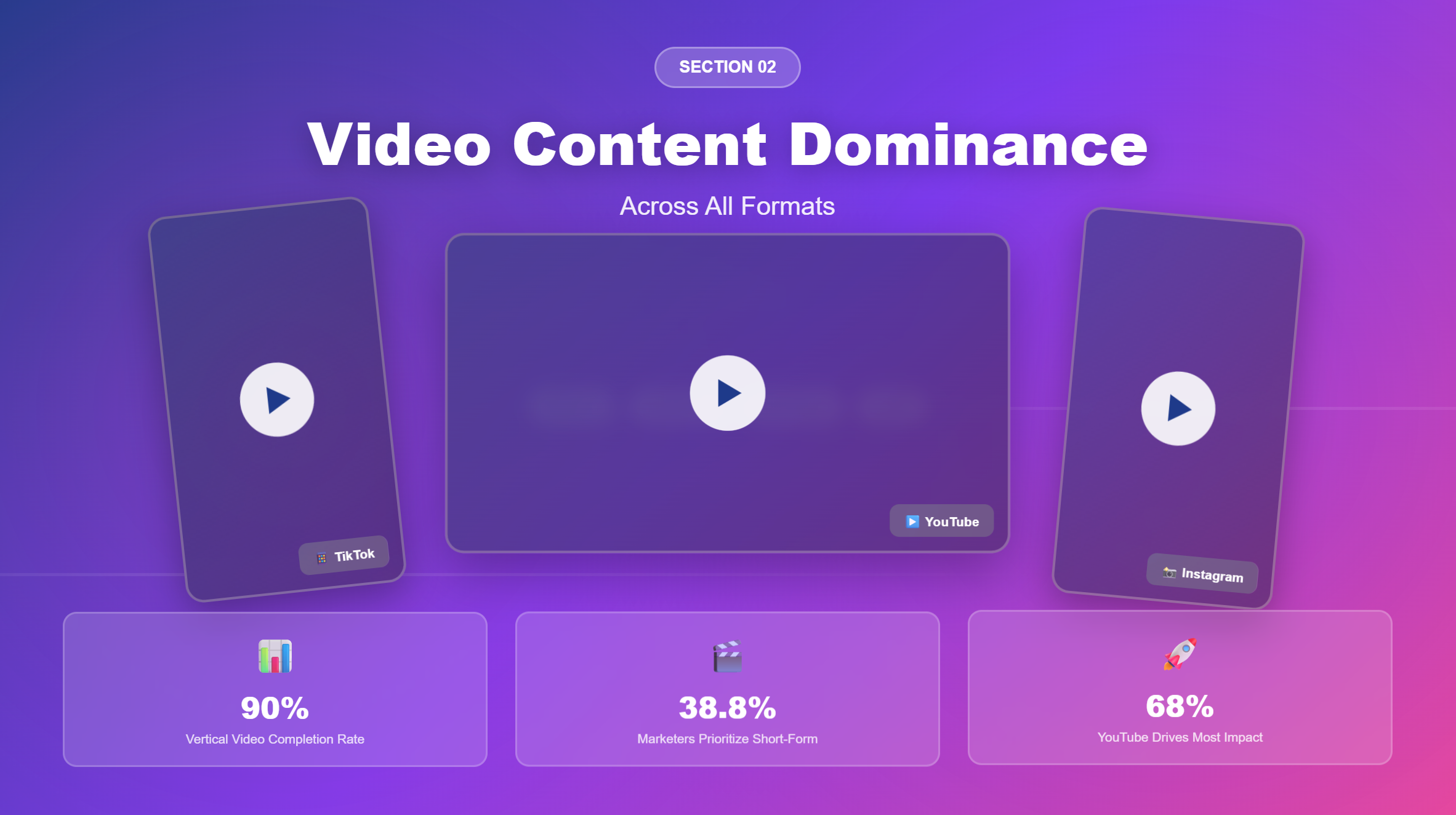
Video isn’t just king in 2026—it’s the entire royal family. But the landscape has evolved beyond simple short-form clips.
Short-Form and Long-Form Coexistence
TikTok videos range from three seconds to 10 minutes, Instagram Reels extend from 15 to 90 seconds, and YouTube Shorts now support up to three minutes of content. This expansion reflects audience appetite for substance, not just entertainment.
The data backs up video’s dominance: 90 percent of vertical videos have a higher watch completion rate than horizontal ones, and when surveyed about their 2026 strategy, 38.8 percent of marketers selected short-form videos as most relevant.
Platform-Specific Video Strategies
TikTok: Focus on trending sounds while ensuring your message stays true to brand goals. The platform rewards authentic storytelling over polished production.
Instagram Reels: Prioritize visually compelling, concise content with strong calls-to-action. The algorithm favors content that keeps users on the platform.
YouTube: Leverage both Shorts for discovery and longer-form content for deep engagement. 68 percent of marketing leaders say YouTube drives the most business impact.
LinkedIn: Don’t overlook video here—the platform has evolved beyond job postings to become a hub for professional storytelling and educational content.
Creating Effective Video Content
The key isn’t just creating more videos—it’s creating purposeful ones:
- Focus on Value: Every video should educate, entertain, or inspire while addressing audience pain points
- Visual Storytelling: Build emotional connections through narrative, not just information delivery
- Clear CTAs: Direct viewers into your conversion funnel with specific next steps
3. Authenticity Over Polish: The Rise of Raw Content
In 2026, audiences are exhausted by overly curated, AI-generated content that feels disconnected from real experiences.
The Authenticity Imperative
Consumers, especially Gen Z and Millennials, want to connect with relatable and transparent brands, making authenticity non-negotiable for brands looking to connect with their audiences.
This shift is partly a response to AI saturation. Per the Q3 2025 Pulse Survey, 46 percent of social media users are not comfortable with brands using AI influencers. People crave genuine human connection, not artificial personas.
User-Generated Content as Proof
User-generated content (UGC) has become the ultimate authenticity currency. When real customers share their experiences, it carries far more weight than polished brand messaging.
Why UGC Works:
- Builds trust through peer recommendations
- Provides social proof at scale
- Creates community around shared experiences
- Costs significantly less than traditional content production
Implementing an Authenticity Strategy
Show Behind-the-Scenes: Let audiences see the humans behind your brand—the real team members, genuine workplace culture, and honest product development process.
Embrace Imperfection: Raw, unfiltered content often outperforms highly produced material. A selfie-style video from a founder can generate more engagement than a professionally shot commercial.
Amplify Customer Voices: Create systems to collect, curate, and share customer stories. Tools like TINT and Stackla can help aggregate UGC across platforms.
Be Transparent: Share both wins and challenges. Audiences appreciate honesty about setbacks and how you’re addressing them.
4. Community Management Takes Center Stage
After years of being treated as an afterthought, community management is finally getting its moment.
Why Community Matters Now
Experts believe community management will be a key social media marketing trend in 2026, with Kendall Dickieson, Freelance Social Media Consultant, saying “Community management is finally getting its moment again”.
The data supporting this is clear: Two of the top traits that make brands stand out on social are how they engage with their followers and how quickly they respond to customers, with roughly three-quarters of social users agreeing a brand should reply on social within 24 hours.
The stakes are high: if a brand doesn’t respond at all, users report they’ll buy from a competitor.
What Gen Z Wants
Sprout’s Q4 2025 Pulse Survey found that the top things Gen Z wants brands to prioritize on social in 2026 are interacting with audiences in smaller spaces like broadcast channels and surprise-and-delight moments.
Building Effective Communities
Establish Response Standards: Set 24-hour response time goals and track them as key performance indicators. Make response time as important as reach metrics.
Create Dedicated Roles: Stop treating community management as an “extra duty” for content creators. Dedicated community managers focus on building relationships, not just posting content.
Build Exclusive Spaces: Create VIP communities where your most engaged followers can connect directly with your brand. Platforms like Discord, Circle, or even Instagram’s broadcast channels work well for this.
Implement Social Listening: Use tools like Sprout Social or Brandwatch to proactively identify engagement opportunities before customers even tag you.
Reward Engagement: Develop surprise-and-delight strategies that recognize your most active community members. This could be early product access, exclusive content, or simple public recognition.
5. AI as an Amplifier, Not a Replacement in Social Media Marketing
Artificial intelligence has become deeply embedded in social media marketing workflows, but its role is evolving in unexpected ways.
The AI Reality in Social Media Marketing 2026
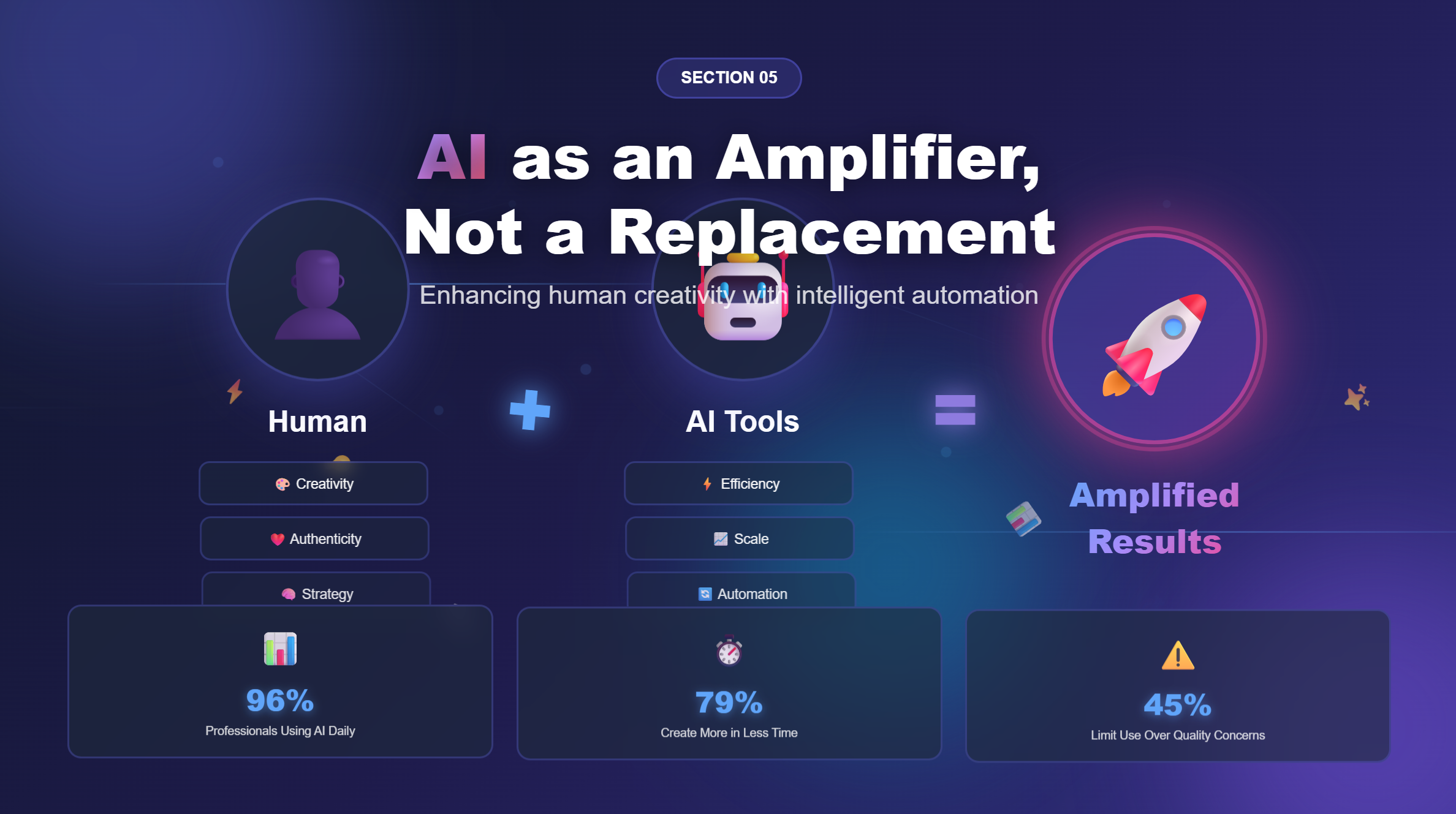
96 percent of professionals already use AI for social media, with 7 out of 10 using it daily, and 79 percent say AI helps them create more content in less time.
However, there’s a critical gap: 36 percent don’t know or don’t measure whether AI-generated content actually performs better, and 45 percent limit their use of AI because they’re afraid of losing quality.
Smart AI Integration for Social Media Marketing
AI is baked into every part of social media marketing content workflows by 2026—not as a gimmick, but as a requirement for things like captions, scripts, and content variations.
The winning approach uses AI to:
Scale Production: Tools like ChatGPT, Jasper, and Copy.ai help generate multiple content variations quickly.
Repurpose Strategically: Platforms like Descript make it easy to transform one video into five different formats for various platforms.
Analyze Performance: AI-powered analytics tools identify patterns humans might miss, revealing what content resonates and why.
Maintain Brand Voice: The best use of AI involves training it on your existing content to maintain consistency while increasing output.
Automate Your Social Media Marketing with FranknAI
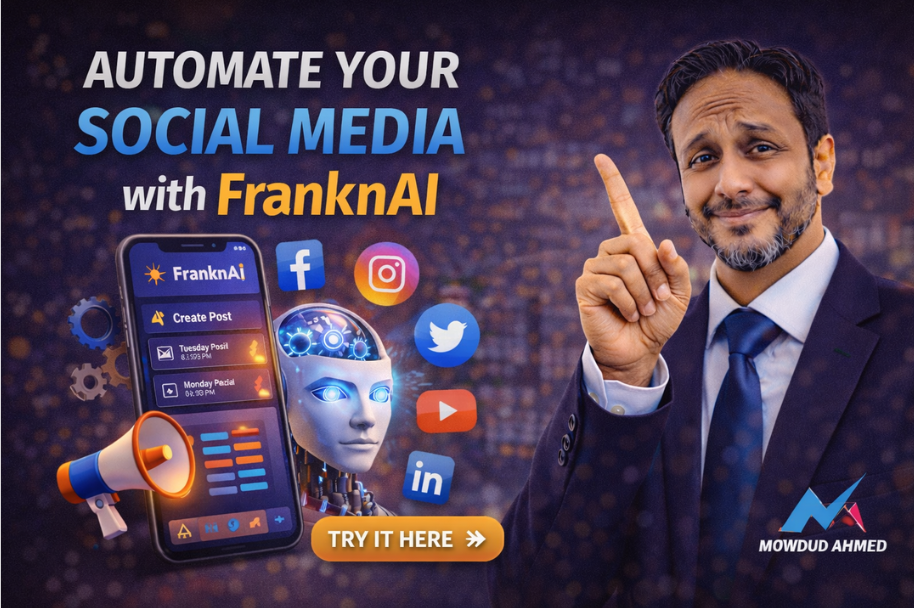
If you’re drowning in content creation and struggling to maintain consistent posting across platforms, FranknAI offers a game-changing solution for social media marketing automation.
This powerful tool analyzes your business and generates an entire year’s worth of content—365 days of posts tailored to your brand voice. No more spending 12+ hours weekly on content creation or paying $2,000-$5,000 monthly for agencies.
What makes FranknAI different:
- Complete automation: Set up once in under 30 minutes, then watch as AI publishes daily across Instagram, Facebook, LinkedIn, X (Twitter), and Discord
- Brand voice preservation: The AI learns your unique tone and style, ensuring every post sounds authentically like your brand
- Multi-platform optimization: Each post is automatically formatted for the specific platform’s best practices
- Commercial license included: Perfect for agencies managing multiple client accounts
- Unlimited businesses: Use your credits across as many brands or satellite pages as you want
With FranknAI’s usage-based pricing starting at just $47 for 730 standard credits (with the current double credit promotion), you’re looking at approximately $0.06 per post—a fraction of what traditional content creation costs.
The platform includes a 14-day money-back guarantee, so you can test how AI automation transforms your social media marketing workflow risk-free. Try FranknAI now and reclaim your time while maintaining the consistency algorithms demand.
What AI Cannot Replace in Social Media Marketing
While AI excels at efficiency, it cannot replicate:
- Genuine emotional connection
- Cultural nuance and timing
- Strategic creativity and innovation
- Authentic community relationships
Josh Hackbarth, CMO of MGA Entertainment, expects to see AI used to help streamline social teams’ pipelines and identify trends rather than generate actual content, viewing it much more as backend support.
6. Social Commerce Becomes Seamlessly Integrated
The line between social platforms and shopping destinations has completely blurred in 2026.
The Shopping Integration
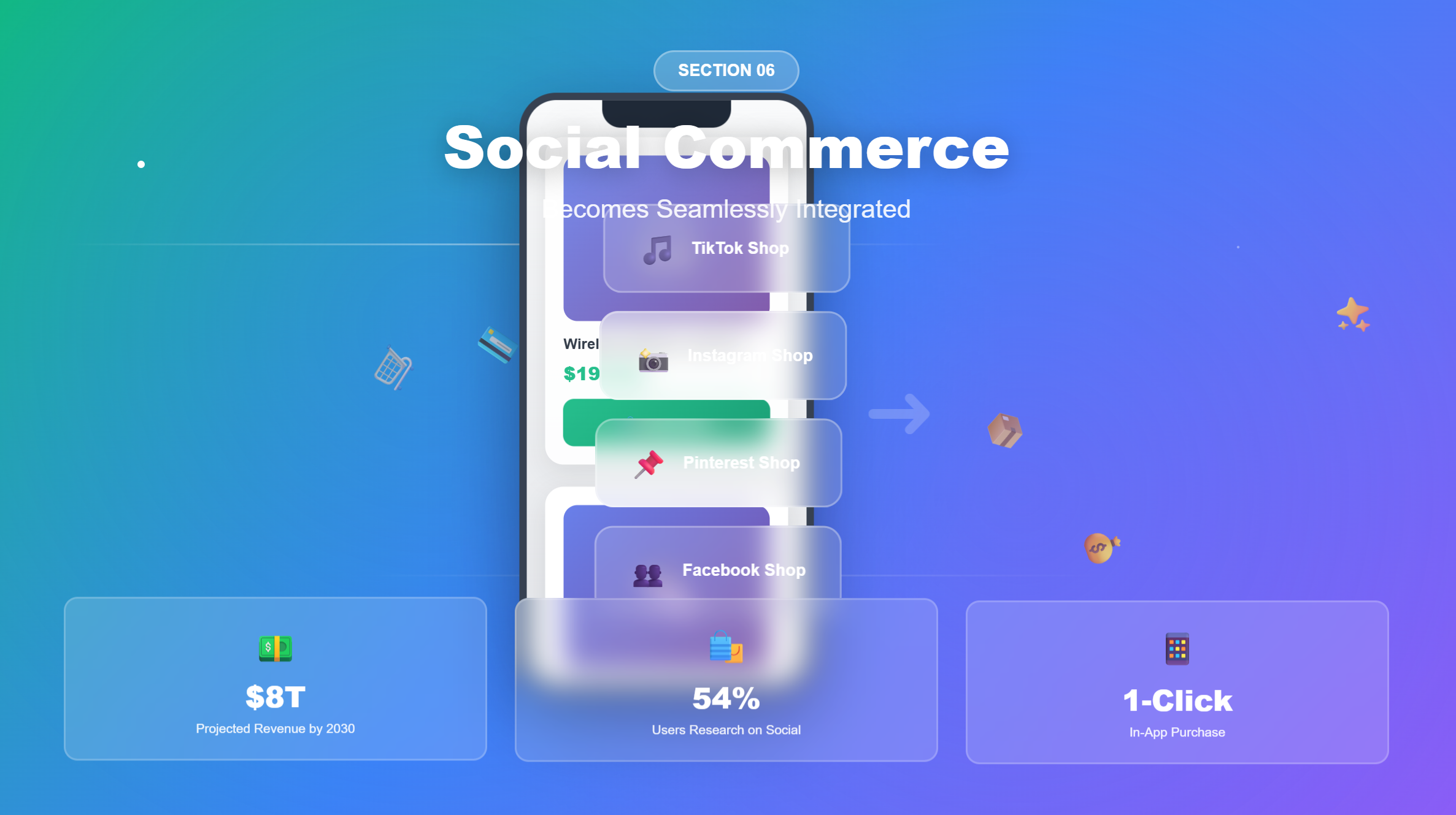
In 2026, in-app shopping is even more seamless and personalized while merging community, entertainment, and convenience, with platforms like TikTok Shop, Instagram Checkout, and Pinterest Shopping making it easy to discover and purchase products all in one place.
Social commerce revenue is projected to exceed $8 trillion by 2030, making this one of the most lucrative trends for brands to capitalize on.
Platform-Specific Commerce Strategies
Each platform requires a different selling approach:
TikTok Shop: Leverage creator partnerships who can demonstrate products authentically. The soft sell works better than aggressive “buy now” messaging.
Instagram Shopping: Use tagged products in organic posts and Stories. Shoppable posts should feel native to the feed, not like advertisements.
Pinterest Shopping: Focus on aspiration and inspiration. Pinterest users are planning purchases, so beautiful lifestyle imagery converts well.
Facebook Marketplace: Local and direct-to-consumer brands can build significant businesses through Facebook’s commerce features.
Best Practices for Social Selling
Show, Don’t Tell: Instead of listing product features, demonstrate how the product improves daily life. Contextual content converts better than specification sheets.
Partner Wisely: Partner with influencers who deeply align with your brand values and have loyal followings—authenticity matters more than follower count.
Reduce Friction: Make the path to purchase as short as possible. Every additional click decreases conversion rates.
Provide Social Proof: Showcase customer reviews, user photos, and testimonials directly in your shopping content.
7. Fighting Social Media Fatigue with Intentionality
Perhaps the most subtle but significant trend is the industry-wide response to content saturation.
The Saturation Problem
Social media shows extreme levels of saturation, with content cycles moving faster than ever and social media trends often being little more than fleeting moments. Social users can barely keep up, let alone engage meaningfully.
The Quality Over Quantity Shift
To be successful in 2026, experts say brands must strategize to overcome social media fatigue, with a key part of that strategy being posting less frequently and more purposefully.
Greg Swan, Senior Partner at FINN Partners agency, puts it perfectly: “Saturation is a signal. But not one to get louder, but to get more intentional. If your brand disappeared from social tomorrow, would anyone notice? If not, it’s time to start creating moments that matter.”
Creating Moments That Matter
Focus on Recognition: Moving into 2026, brands need to prioritize genuine connection and storytelling, rather than blindly hopping on social media trends and chasing fleeting moments.
The brands earning genuine engagement aren’t the ones with the fastest turnaround on trending audio—they’re the ones building recognizable characters, lore, and brand worlds that feel distinctly theirs.
Build Brand Worlds: Create consistent narratives and recurring themes that audiences can follow over time. Think less about viral moments and more about building a distinct universe.
Quality Content Markers:
- It reflects your unique brand perspective
- It provides genuine value to your audience
- It could only come from your brand
- It contributes to long-term brand building
- It creates conversation, not just consumption
Preparing Your 2026 Social Media Marketing Strategy
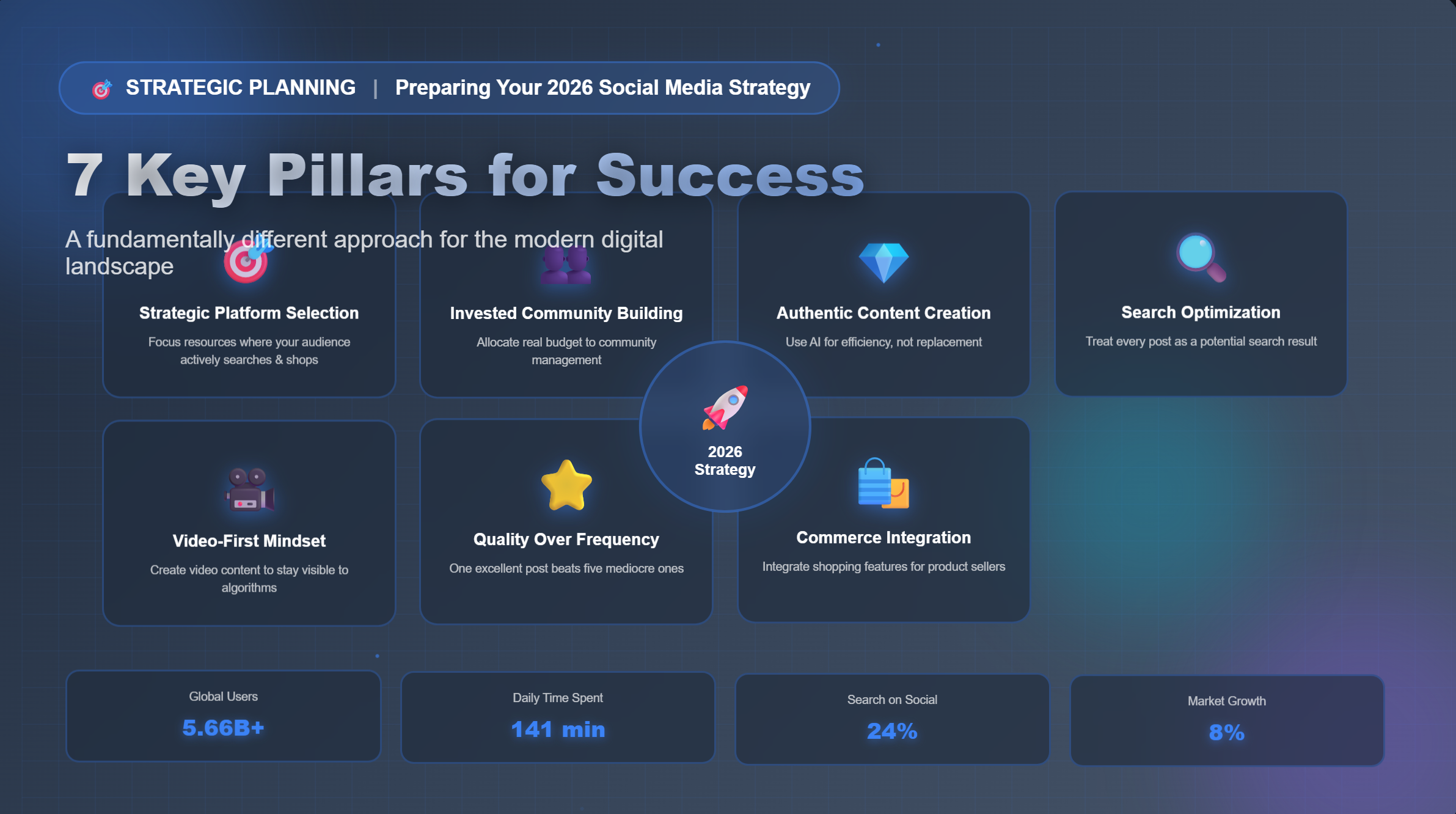
The social media marketing landscape in 2026 demands a fundamentally different approach than previous years. Success now requires:
Strategic Platform Selection: Don’t try to be everywhere. Focus your social media marketing resources on platforms where your audience actively searches and shops.
Invested Community Building: Allocate real budget and personnel to community management. This isn’t optional in social media marketing anymore.
Authentic Content Creation: Reduce reliance on AI for front-facing content. Use it for efficiency, not replacement of your unique brand voice.
Search Optimization: Treat every social post as a potential search result. Optimize accordingly without sacrificing authenticity in your social media marketing efforts.
Video-First Mindset: If you’re not creating video content, you’re invisible to most platforms’ algorithms in 2026.
Quality Over Frequency: Post less, but make every post count. One excellent piece of social media marketing content beats five mediocre ones.
Commerce Integration: If you sell products, integrate shopping features. The purchase decision increasingly happens on-platform.
The Bottom Line: Mastering Social Media Marketing in 2026
Social media marketing in 2026 isn’t about following every trend or posting constantly. It’s about understanding how consumer behavior has fundamentally shifted and adapting your strategy accordingly.
The platforms have evolved from simple networking tools to comprehensive ecosystems where people search for information, discover products, make purchases, and build communities. Brands that recognize this shift and invest in authentic engagement, quality content, and genuine community building will thrive in their social media marketing efforts.
Those that continue treating social media marketing as a broadcast channel for polished advertisements will find themselves increasingly irrelevant in an algorithm that prioritizes connection over perfection.
The opportunity is enormous—with over 5.6 billion users spending significant portions of their daily lives on these platforms. But success in social media marketing requires strategy, intention, and a willingness to evolve alongside your audience.
Ready to Level Up Your Social Media Marketing Game?
Understanding trends is just the beginning. To truly excel in social media marketing in 2026, you need to master the fundamental skills that drive real results.
Discover the essential competencies every successful social media marketing professional needs in my comprehensive guide: Top 6 Skills to Master in Social Media Marketing for 2026
In this post, you’ll learn:
- The technical social media marketing skills that separate good marketers from great ones
- How to develop strategic thinking that anticipates platform changes
- The creative abilities that help your content stand out in crowded feeds
- Analytics proficiency that proves ROI to stakeholders
- Community management techniques that build loyal audiences
- Automation strategies that save time without sacrificing authenticity
Don’t just follow trends—build the social media marketing skills that let you create them. Read the full guide now and take your social media marketing to the next level.

Любовь к веб-сайту — очень индивидуально приятно и
много, чтобы увидеть! Посетите также мою
страничку создание почтового
аккаунта https://www.ge.infn.it/wiki//gpu/index.php?title=User:MichelPigdon4
Thank you so much for your kind words—I truly appreciate it! 😊
I’m really glad you found the tips helpful and worth bookmarking. A lot of time and effort goes into researching, testing, and sharing practical strategies that actually work for small businesses, so your feedback means a lot.
Stay connected, and I hope you continue to find valuable insights here! 🚀