


Affiliate marketing for small business has become one of the most powerful growth strategies in today’s evolving digital economy. The digital marketplace has witnessed remarkable transformation over the past year, and affiliate marketing stands at the forefront of this revolution. According to recent industry reports, the global affiliate marketing industry reached $19.6 billion in 2025, reflecting a 15% increase from the previous year. For small businesses, this sustained expansion translates into unprecedented opportunities to scale operations, increase brand visibility, and drive sales—without the heavy investment required for traditional advertising.
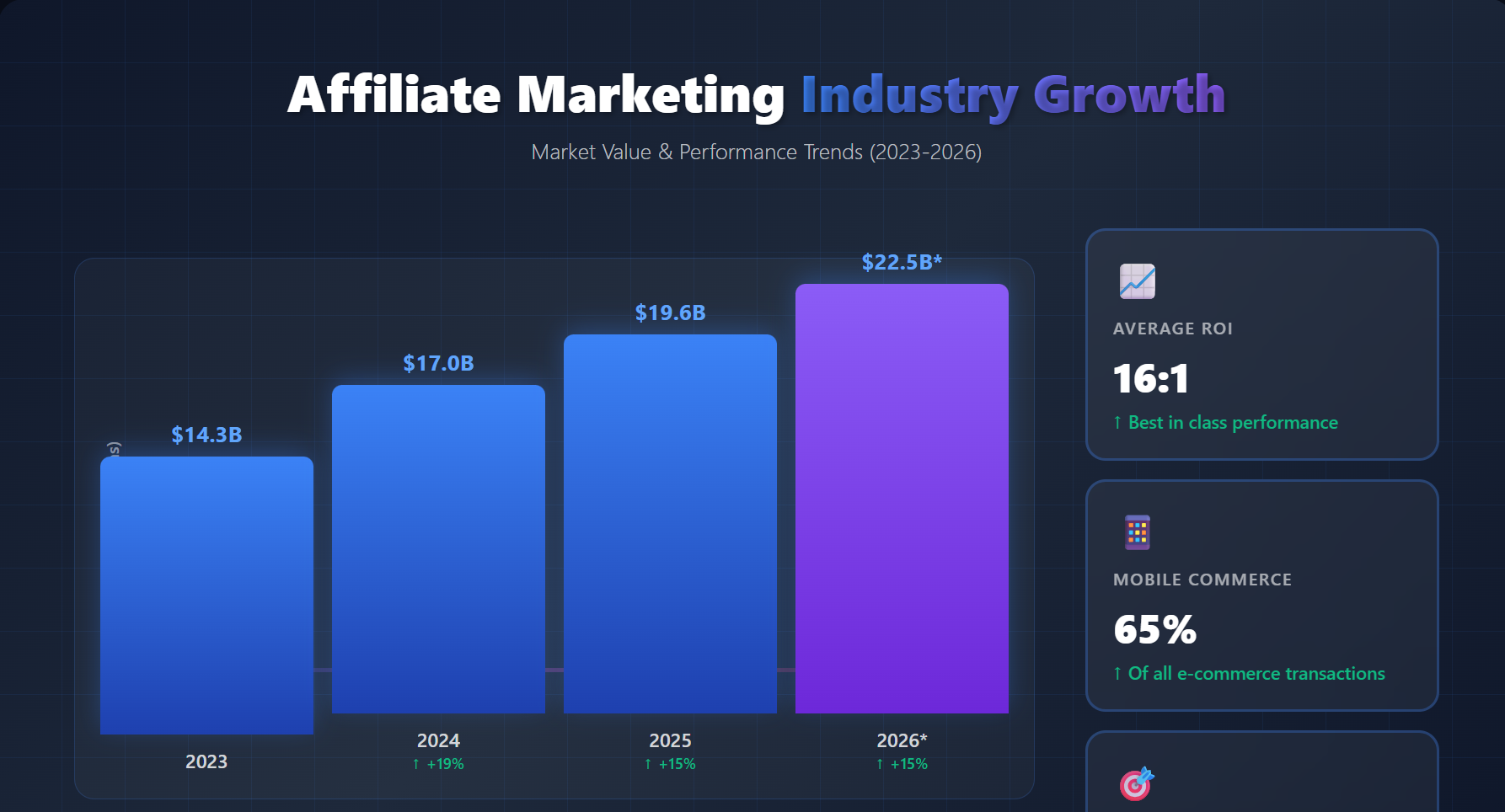
What makes this growth particularly exciting for small business owners is the democratization of marketing power. Companies with limited budgets can now compete with industry giants by leveraging the reach and expertise of affiliate partners. In 2025 alone, businesses using affiliate marketing reported an average return on investment (ROI) of 16:1, significantly outperforming traditional advertising channels like display ads and paid social media campaigns.
If you’re a small business owner selling products or services online, you’ve likely experienced the challenge of reaching new customers while managing tight marketing budgets. The solution might be simpler than you think: affiliate marketing partnerships. This strategic approach allows you to build a distributed sales force that works on your behalf, driving traffic and conversions while you focus on what you do best—running your business.
Understanding Affiliate Marketing: Your Business Growth Partner
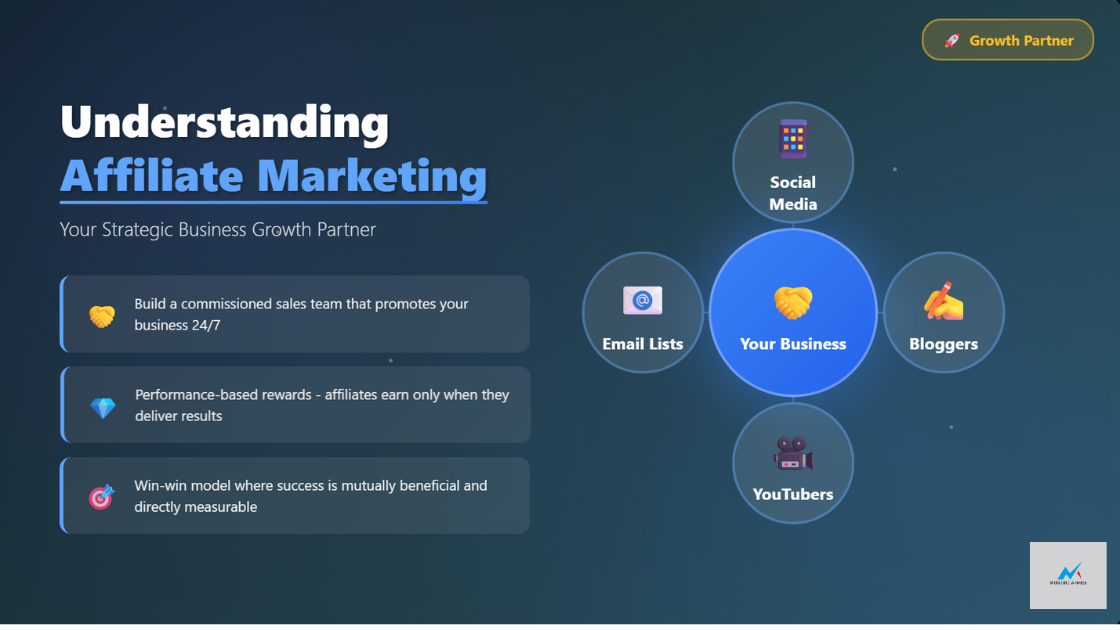
Think of affiliate marketing as having a team of commissioned salespeople working around the clock to promote your business. An affiliate marketer acts as a strategic partner—a modern-day sidekick who helps you expand your customer base and boost revenue through performance-based promotion.
Here’s how it works: affiliates promote your products or services through their websites, blogs, social media channels, or email lists. When someone makes a purchase through their unique tracking link, the affiliate earns a predetermined commission. It’s a win-win arrangement where success is mutually beneficial and directly measurable.
What sets affiliate marketing apart from traditional advertising is its risk-reward structure. Unlike paying upfront for billboard space or social media ads with uncertain returns, you only compensate affiliates when they deliver actual results—real sales from real customers. This performance-based model makes affiliate marketing particularly attractive for small businesses operating with limited marketing budgets.
The Strategic Advantages of Affiliate Marketing for Small Businesses
Cost-Effective Customer Acquisition
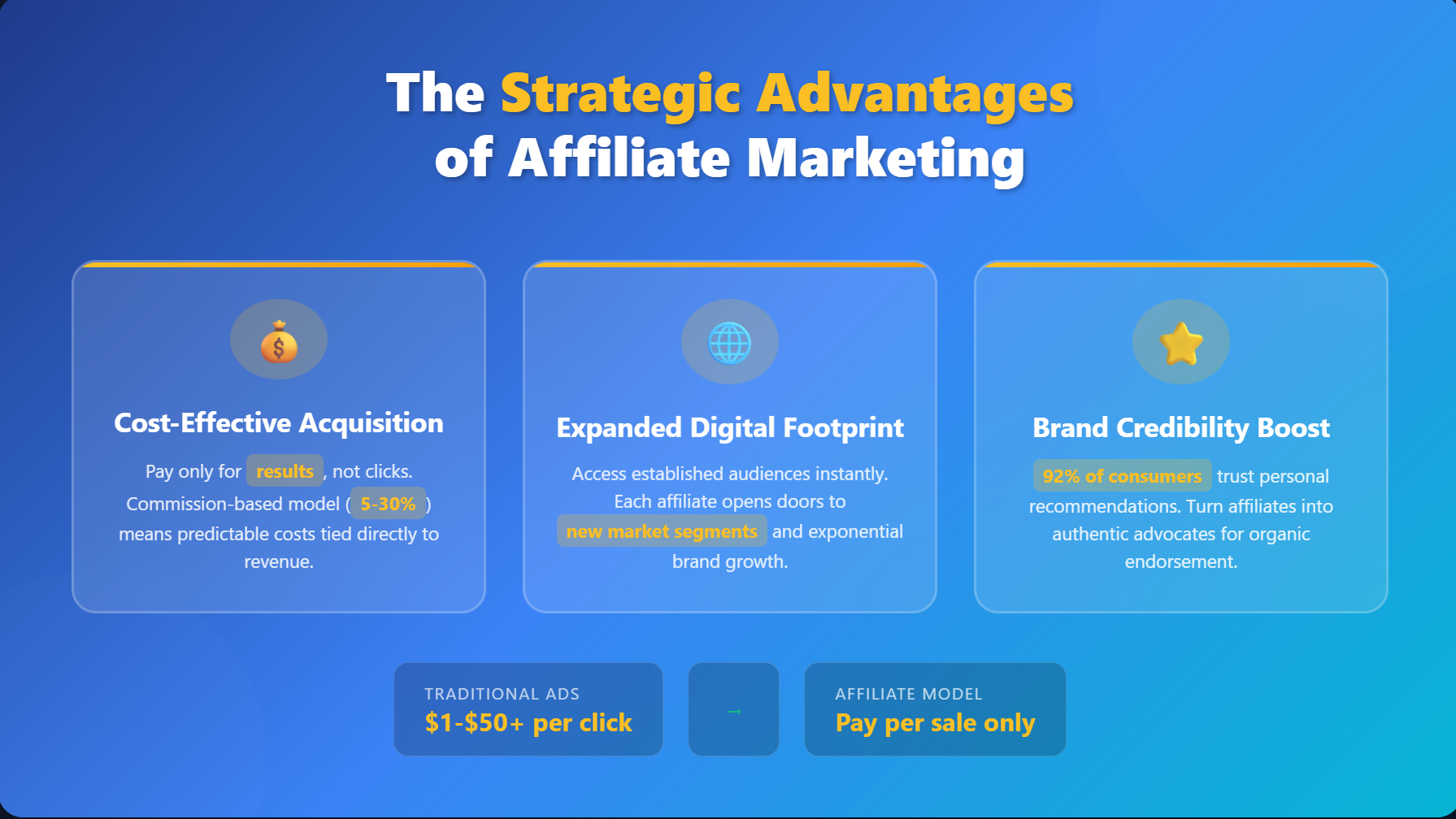
The financial efficiency of affiliate marketing cannot be overstated. Traditional advertising requires significant upfront investment with no guarantee of returns. Google Ads can cost anywhere from $1 to $50+ per click depending on your industry, and there’s no assurance those clicks will convert to sales. Television commercials, print ads, and sponsored content all demand payment regardless of performance.
Affiliate marketing flips this model entirely. You establish a commission structure—typically ranging from 5% to 30% depending on your industry and profit margins—and affiliates only earn when they generate sales. This means your customer acquisition costs remain predictable and directly tied to revenue. If an affiliate doesn’t produce results, you don’t pay a penny beyond any minimal platform fees.
Expanding Your Digital Footprint
Every affiliate partner brings their own established audience, creating instant access to potential customers you might never reach on your own. A fashion blogger with 50,000 followers, a tech reviewer on YouTube with a dedicated subscriber base, or a niche forum moderator with deep community trust—each affiliate opens doors to new market segments.
This expanded reach compounds over time. As you build relationships with multiple affiliates across different platforms and niches, your brand presence multiplies exponentially. What would take years to build organically through your own content marketing efforts can be accelerated through strategic affiliate partnerships.
Building Brand Credibility Through Third-Party Endorsement
There’s a psychological principle at play in affiliate marketing that traditional advertising simply can’t replicate: trusted recommendation. When an affiliate with an engaged audience endorses your product, it carries the weight of their personal reputation. According to Nielsen research, 92% of consumers trust recommendations from individuals over branded content—a statistic that has remained remarkably consistent as we move into 2026.
Your affiliates become authentic advocates who can share genuine experiences with your products, answer questions from their communities, and provide the social proof that converts browsers into buyers. This organic endorsement is marketing gold that money alone cannot buy.
Building High-Performance Affiliate Partnerships
Selecting the Right Affiliate Partners
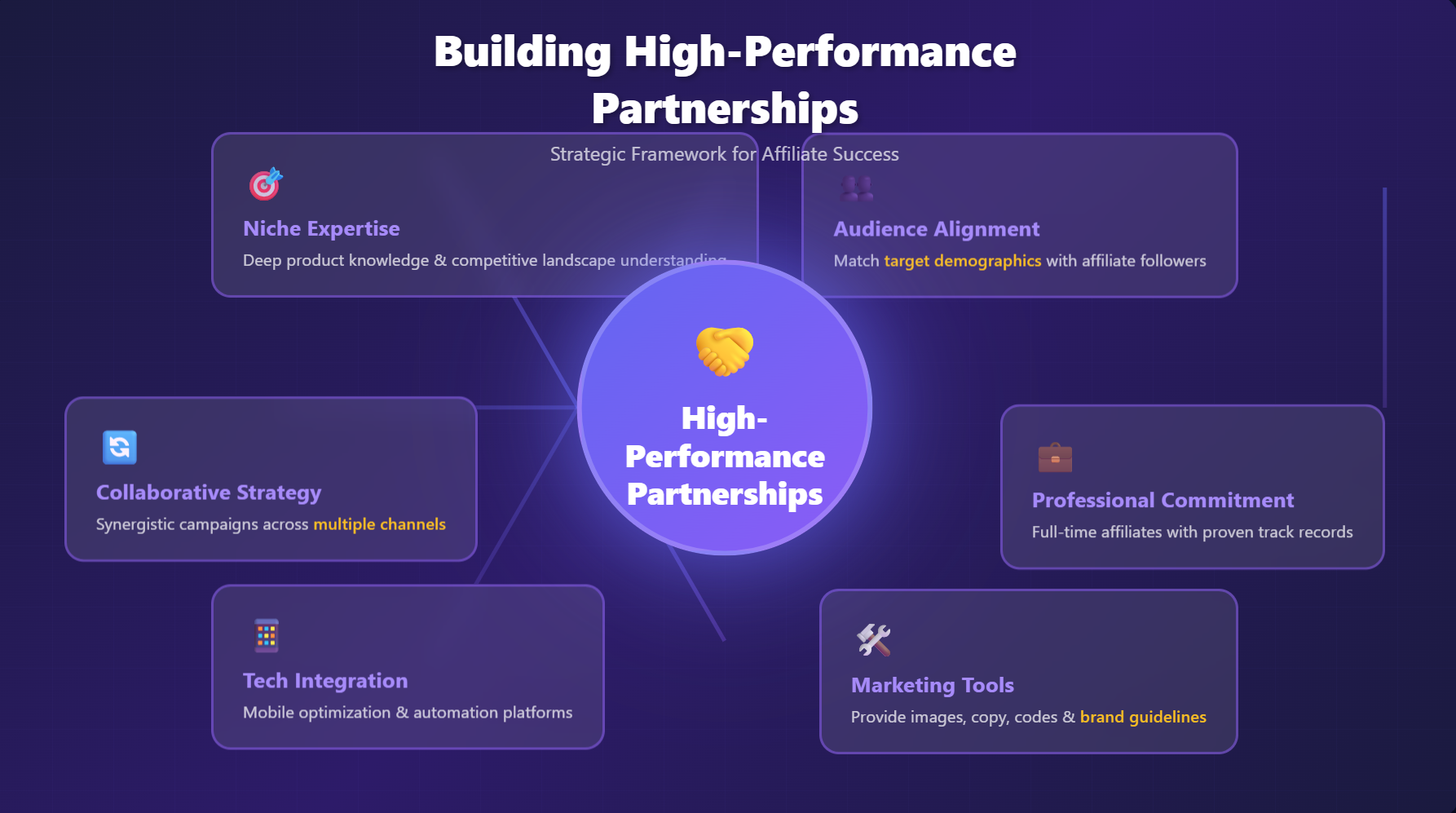
Not all affiliates are created equal, and choosing the right partners can make or break your program’s success. The ideal affiliate should possess three critical qualities: niche expertise, audience alignment, and professional commitment.
Niche expertise ensures your affiliate understands your product category deeply enough to create compelling, accurate promotional content. An affiliate promoting fitness equipment should understand workout principles, nutrition basics, and the competitive landscape of fitness products. This knowledge enables them to position your offerings effectively and address potential customer objections convincingly.
Audience alignment is equally crucial. Your affiliate’s followers should match your target customer profile. A partnership with a popular influencer makes no business sense if their audience doesn’t need or want what you’re selling. Analyze your potential affiliate’s demographics, engagement rates, and content themes to ensure strategic fit.
Professional commitment separates successful affiliate programs from disappointing ones. Full-time, professional affiliates treat their promotional efforts as a business. They understand marketing funnels, conversion optimization, and audience engagement. They’re invested in your mutual success because their income depends on it. Part-time hobbyists, while enthusiastic, often lack the consistency and strategic approach necessary for significant results.
Implementing Collaborative Marketing Strategies
The most successful affiliate partnerships function as true collaborations rather than transactional arrangements. Consider coordinating your marketing efforts to create synergistic campaigns that amplify impact.
For example, when launching a seasonal promotion, you might send direct mail to your existing customer list while your affiliates simultaneously promote the sale through their digital channels. This multi-touch approach reinforces your message across different platforms, increasing the likelihood of conversion. Someone who receives your postcard and then sees their trusted blogger discussing the same promotion is far more likely to take action.
Provide your affiliates with the tools they need to succeed: high-quality product images, compelling copy templates, unique discount codes, and clear brand guidelines. The easier you make their job, the more effectively they can promote your offerings. Regular communication is essential—share upcoming product launches, seasonal trends, and performance insights that help them optimize their strategies.
Leveraging Modern Marketing Technologies
The affiliate marketing landscape has evolved dramatically with technological advancement. Mobile commerce alone represented over 65% of all e-commerce transactions in 2025, and this trend continues accelerating into 2026. Your affiliate program must be optimized for mobile users, with tracking links that work seamlessly across devices and promotional content that displays properly on smartphones and tablets.
Marketing automation platforms can help you manage affiliate relationships at scale, automatically tracking performance, processing commission payments, and providing real-time analytics. These tools eliminate manual administrative burden, allowing you to focus on strategy and relationship building.
Social media integration has become non-negotiable. Instagram Shopping, TikTok’s commerce features, and Pinterest’s buyable pins all offer affiliates new ways to seamlessly connect their content with your products. Ensure your affiliate program can support these emerging platforms and provide partners with the resources they need to leverage them effectively.
Performance Monitoring and Optimization
Tracking Affiliate Success Metrics
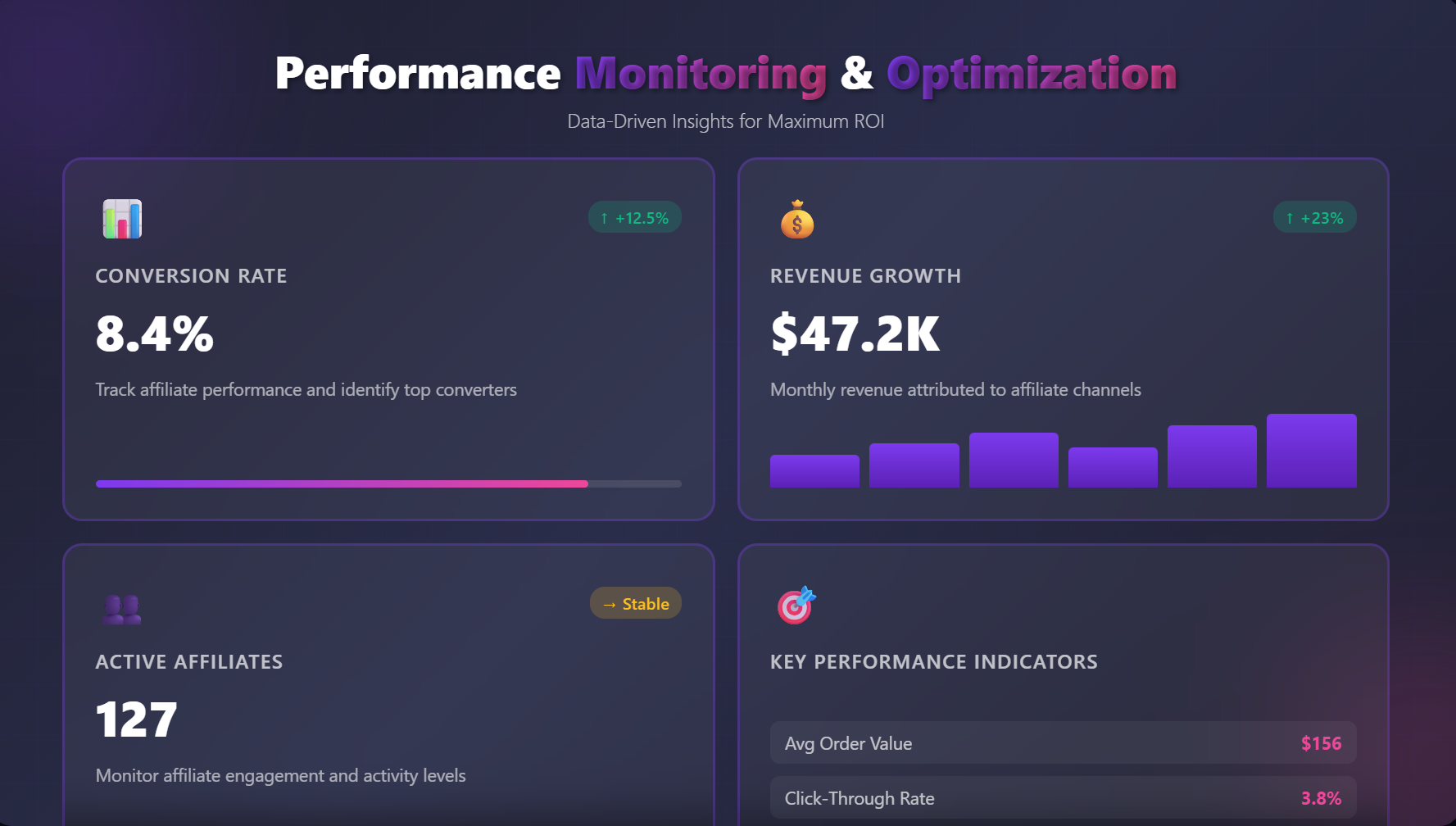
What gets measured gets managed, and this principle is fundamental to successful affiliate programs. Establish clear key performance indicators (KPIs) from the outset: conversion rates, average order value, customer lifetime value attributed to affiliate channels, and overall revenue generated per affiliate.
Most affiliate platforms provide comprehensive analytics dashboards, but don’t just collect data—act on it. Review performance regularly to identify your star performers and understand what makes them successful. Are they using video content? Do they focus on detailed product reviews? Have they built email sequences that nurture prospects over time? These insights can inform best practices you share across your entire affiliate network.
Equally important is identifying underperformers. If an affiliate hasn’t generated sales after a reasonable trial period despite receiving adequate support and resources, it may be time to part ways. Your program has limited bandwidth, and focusing energy on productive partnerships yields better returns than trying to revive inactive relationships.
Protecting Your Brand Reputation
While affiliate marketing offers tremendous upside, it also introduces risk. Unscrupulous affiliates might employ black-hat tactics—spam emails, false advertising claims, trademark bidding, or misleading content—that can damage your brand reputation and potentially violate regulations.
Implement strict affiliate agreements that clearly prohibit such practices and outline consequences for violations. Use monitoring tools to track how and where your brand appears online. Google Alerts for your brand name, regular searches for your products, and specialized affiliate compliance software can help you catch problematic behavior early.
Don’t hesitate to terminate affiliates who violate your guidelines. One bad actor can undo months of reputation building, and protecting your brand integrity must take priority over short-term revenue gains.
Weighing the Advantages and Challenges
The Compelling Benefits
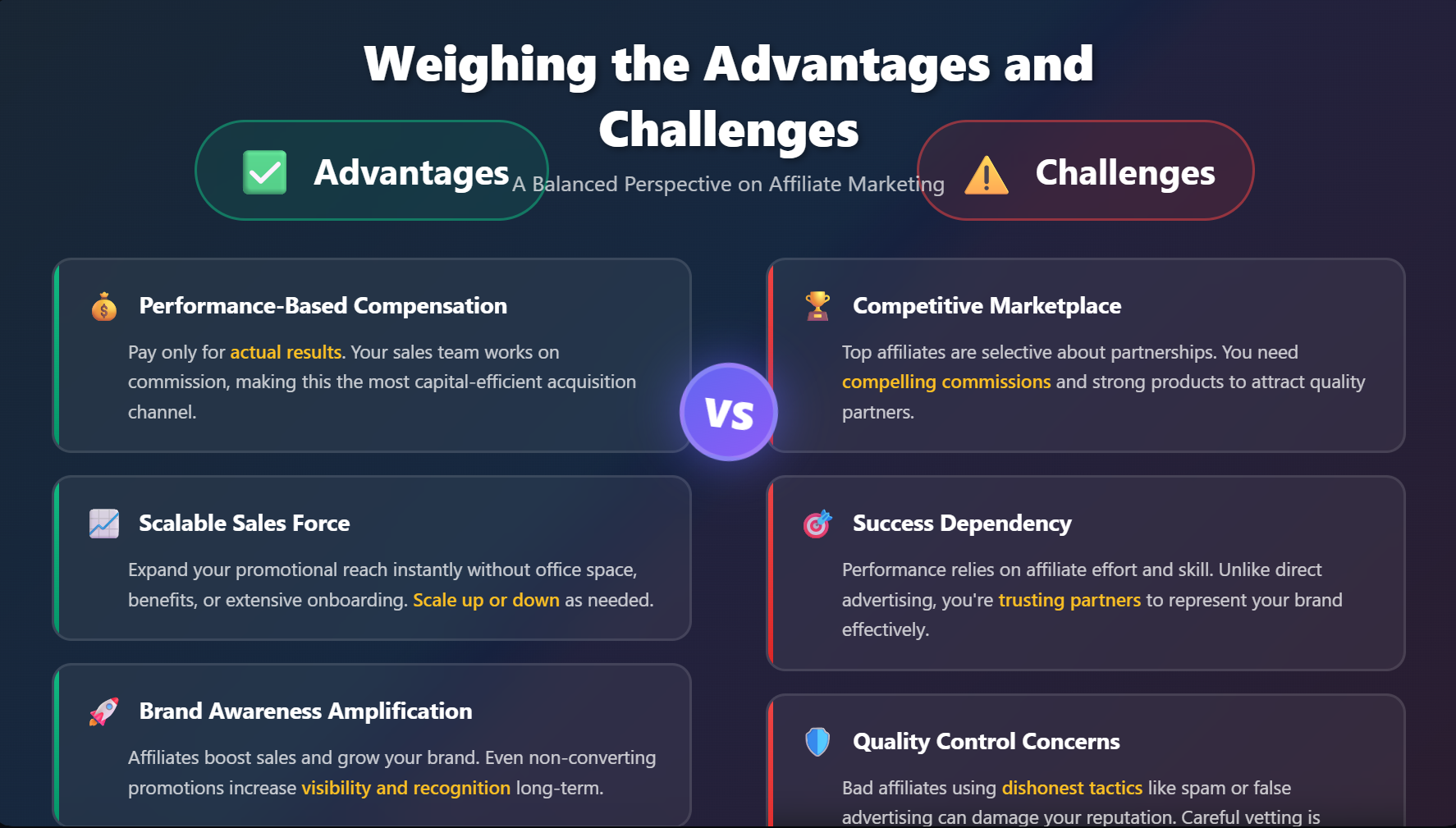
Performance-Based Compensation: You pay only for results, making affiliate marketing one of the most capital-efficient customer acquisition channels available. This is particularly valuable for small businesses where cash flow management is critical.
Scalable Sales Force: Unlike hiring employees, adding new affiliate partners doesn’t require office space, benefits packages, or extensive onboarding. You can scale your promotional reach quickly and contract it just as easily if needed.
Brand Awareness Amplification: Even when affiliates don’t drive immediate sales, their promotional efforts increase brand visibility and recognition. This cumulative awareness builds long-term value that extends beyond direct attribution.
Diverse Marketing Perspectives: Your affiliates bring unique creative approaches to promoting your products. This diversity often uncovers market segments and messaging angles you might never have discovered independently.
The Realistic Challenges
Competitive Marketplace: Affiliate marketing has become increasingly popular, meaning more businesses are competing for top affiliate talent. The best affiliates can be selective about partnerships, so you need compelling commission structures and strong products to attract them.
Success Dependency: Your program’s performance relies heavily on affiliate effort and skill. Unlike direct advertising where you control the message and delivery, affiliate marketing means trusting partners to represent your brand effectively.
Quality Control Concerns: Without proper vetting and monitoring, you might partner with affiliates whose values, tactics, or content quality don’t align with your brand standards. This can create more problems than it solves.
Administrative Overhead: While less resource-intensive than building an internal sales team, managing an affiliate program still requires time for recruitment, communication, support, and performance monitoring.
Taking Your First Steps Toward Affiliate Marketing Success
The data is clear: affiliate marketing works for small businesses willing to invest the effort in building strategic partnerships. The 15% industry growth in 2025 didn’t happen by accident—it reflects real businesses achieving measurable results through this channel.
Success requires more than simply signing up for an affiliate platform. You need competitive commission structures, quality products that affiliates want to promote, responsive support that helps partners succeed, and consistent optimization based on performance data.
Start by clearly defining your ideal customer and identifying where they spend time online. Research potential affiliates in those spaces—bloggers, podcasters, social media influencers, and content creators whose audiences match your target market. Reach out with personalized partnership proposals that explain the mutual benefits.
Whether you’re just exploring affiliate marketing or looking to scale an existing program, the fundamentals remain constant: choose partners wisely, support them generously, monitor performance vigilantly, and optimize continuously.
Ready to dive deeper into building a profitable affiliate marketing strategy? Check out my comprehensive Step-by-Step Affiliate Marketing Guide where I break down everything you need to launch and grow a successful affiliate program, complete with actionable templates, commission structure calculators, and proven outreach strategies that have helped hundreds of small businesses transform their growth trajectory.